
Supplier, parent material, or source lot
Preserve the information needed to understand where the lot came from.
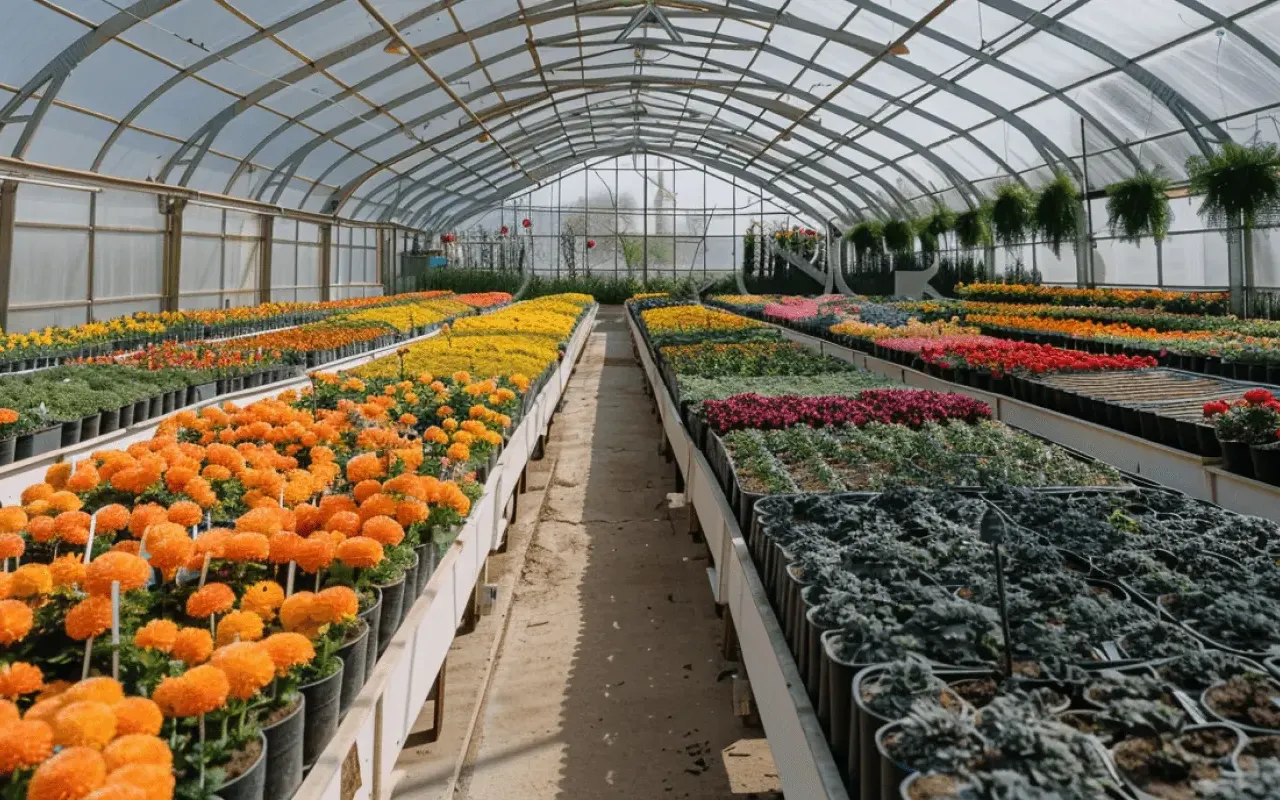
Gros.farm for plant nurseries
Connect provenance, variety, age, location, propagation stage, transplants, daily work, actual counts, grading, and readiness. Gros.farm gives the nursery one traceable history for each production lot.
Plant lots and provenance
Movements and transplants
Actual counts and losses
Readiness and grade
Traceable nursery production
A useful nursery record must retain the link between origin, variety, current place, stage, quantity, work history, and final readiness.
Preserve the information needed to understand where the lot came from.
Keep the current physical location at the level the team works with.
Record splits, losses, grading, and movements instead of relying on the original number.
Tie the next work and quality checks to the active production stage.
Farm registry
Keep facilities, production areas, active crops or lots, and growing cycles in one structure. The registry gives tasks, observations, metrics, and analytics a shared place and production context.
Explore the farm registry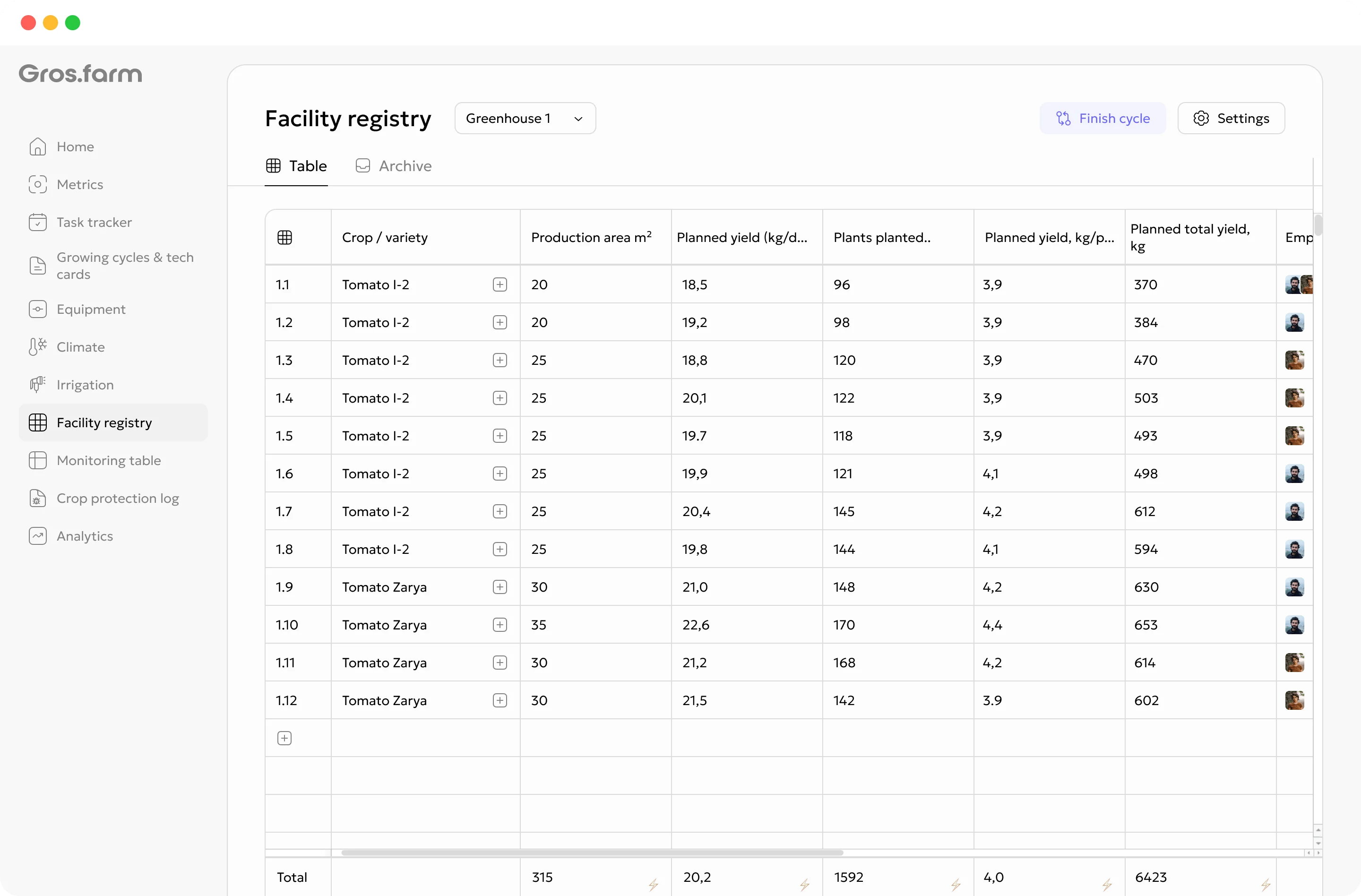
A lot through every stage
The physical location may change, but the lot history should remain continuous through propagation, transplanting, growing-on, hardening, grading, and release.
Record the source, date, variety, quantity, and starting condition.
Track rooting, germination, survival, and early uniformity.
Record container or bed changes, split lots, quantity, and new locations.
Coordinate irrigation, nutrition, spacing, pruning, and protection.
Assess size, quality, losses, and readiness criteria.
Record actual quantity and status for sale, planting, or transfer.
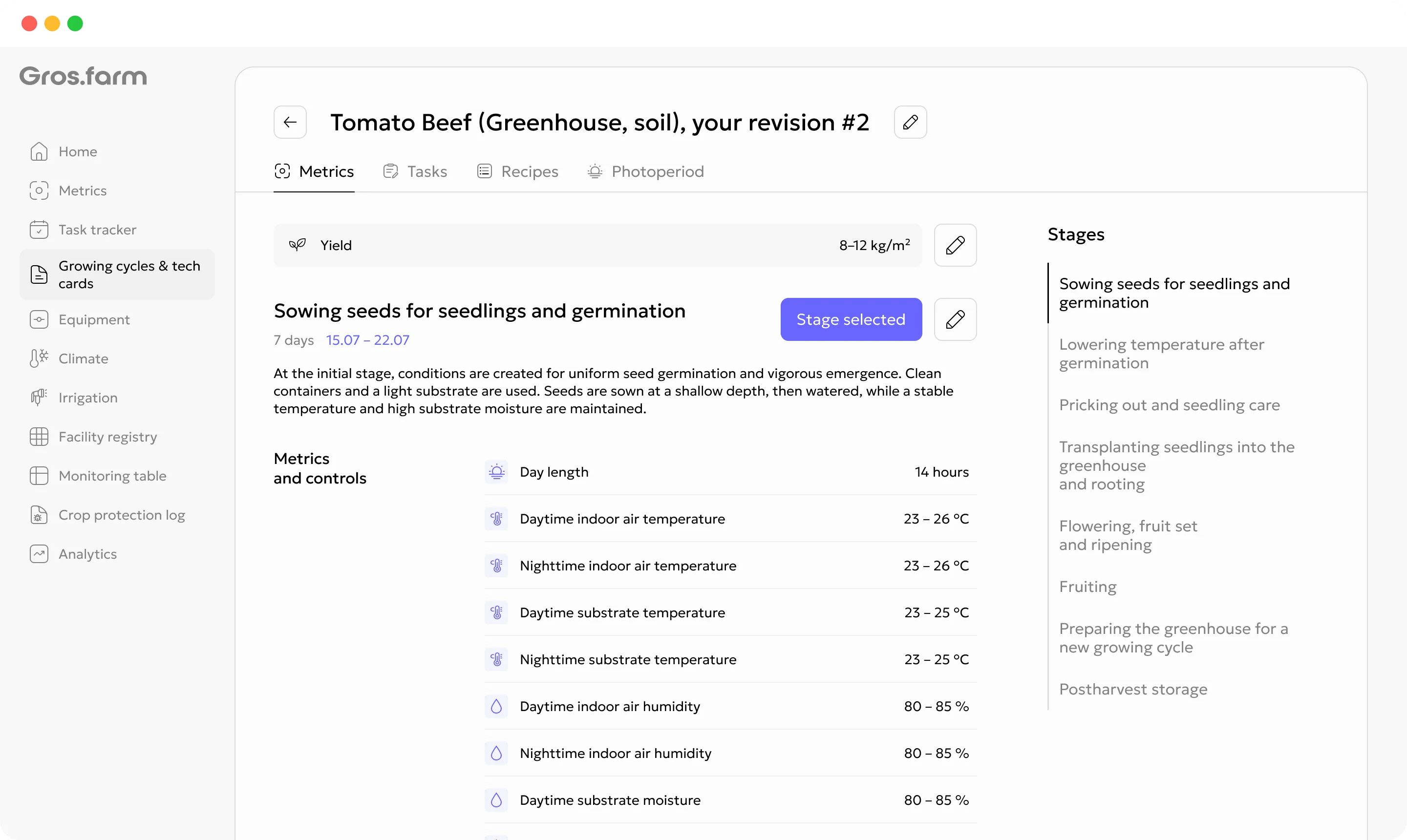
Cultivation plans
A cultivation plan can hold stages, target ranges, recurring work, recipes, photoperiod, and other production parameters. Templates are starting points, not universal recommendations: review every plan for the crop, facility, equipment, and production objective.
Explore digital crop plansNursery work by lot and location
Watering checks, transplanting, spacing, pruning, scouting, grading, and inventory counts should remain tied to the plant lot they affect.
Keep old and new locations, date, quantity, and responsible team member.
Avoid treating the original lot size as the current inventory.
Record grade, size, condition, and any hold reason.
Give the team enough context to execute without additional calls.
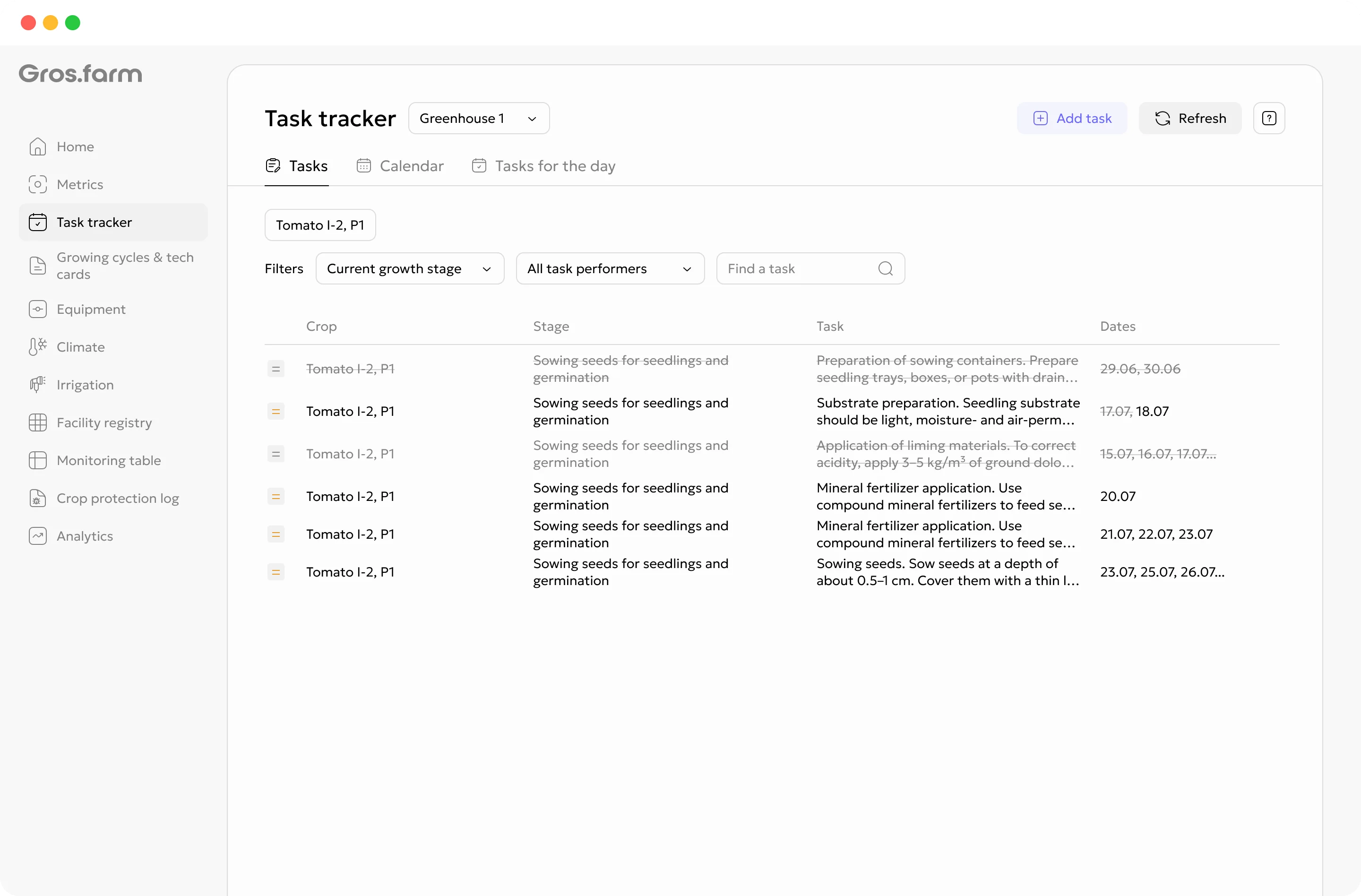
Tasks carry the facility, growing cycle, cultivation-plan stage, date, priority, instruction, and assignee—not just a title and deadline.
Explore tasks and team →Monitoring and crop observations
Add manual observations, key dates, photos, comments, and available automatic or calculated values to the active growing cycle. A shorter, consistently updated monitoring set is more useful than a large table the team cannot maintain.
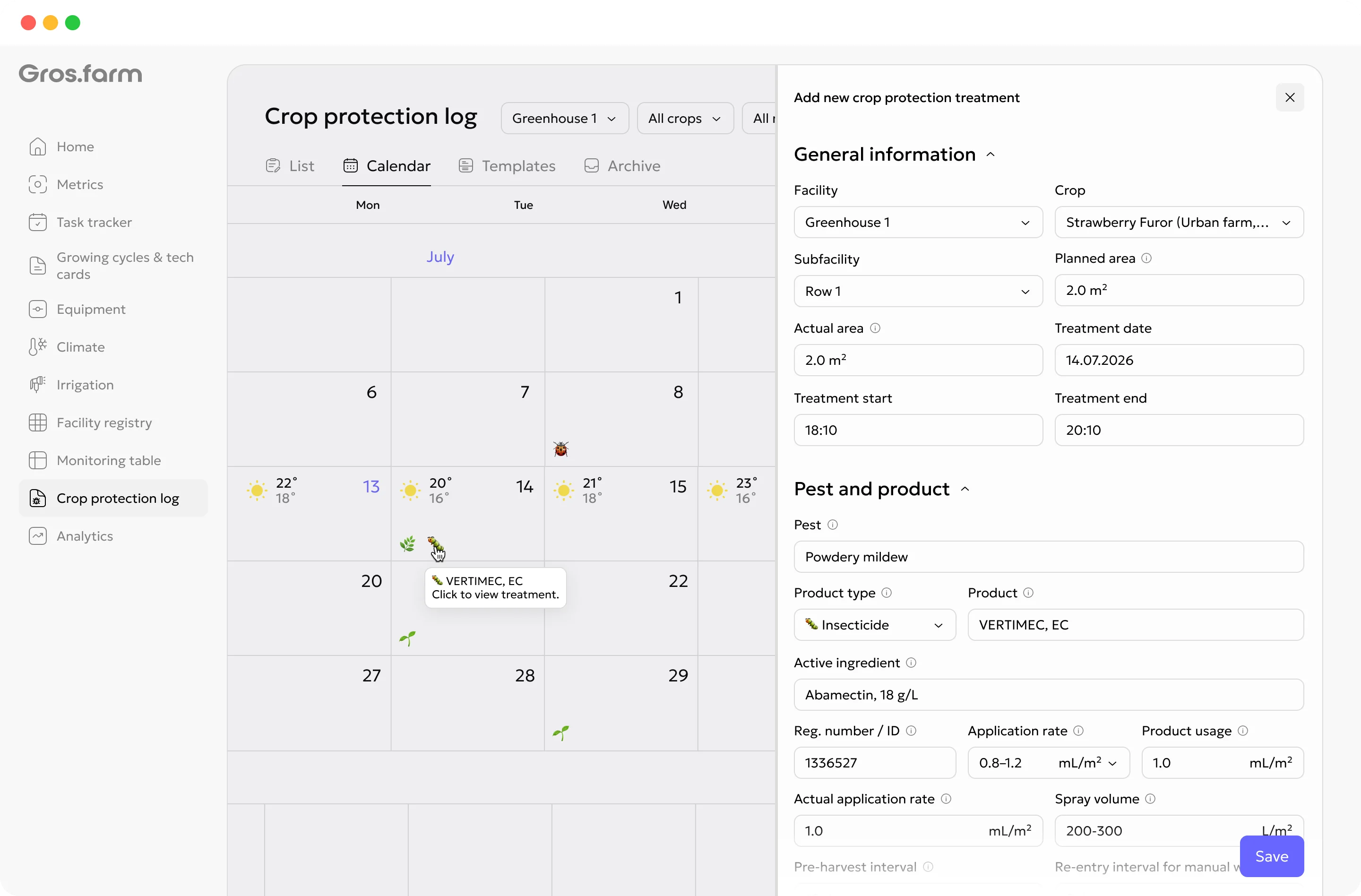
Production analytics
Review where quantity changed, how long each stage took, and what share reached the required grade.
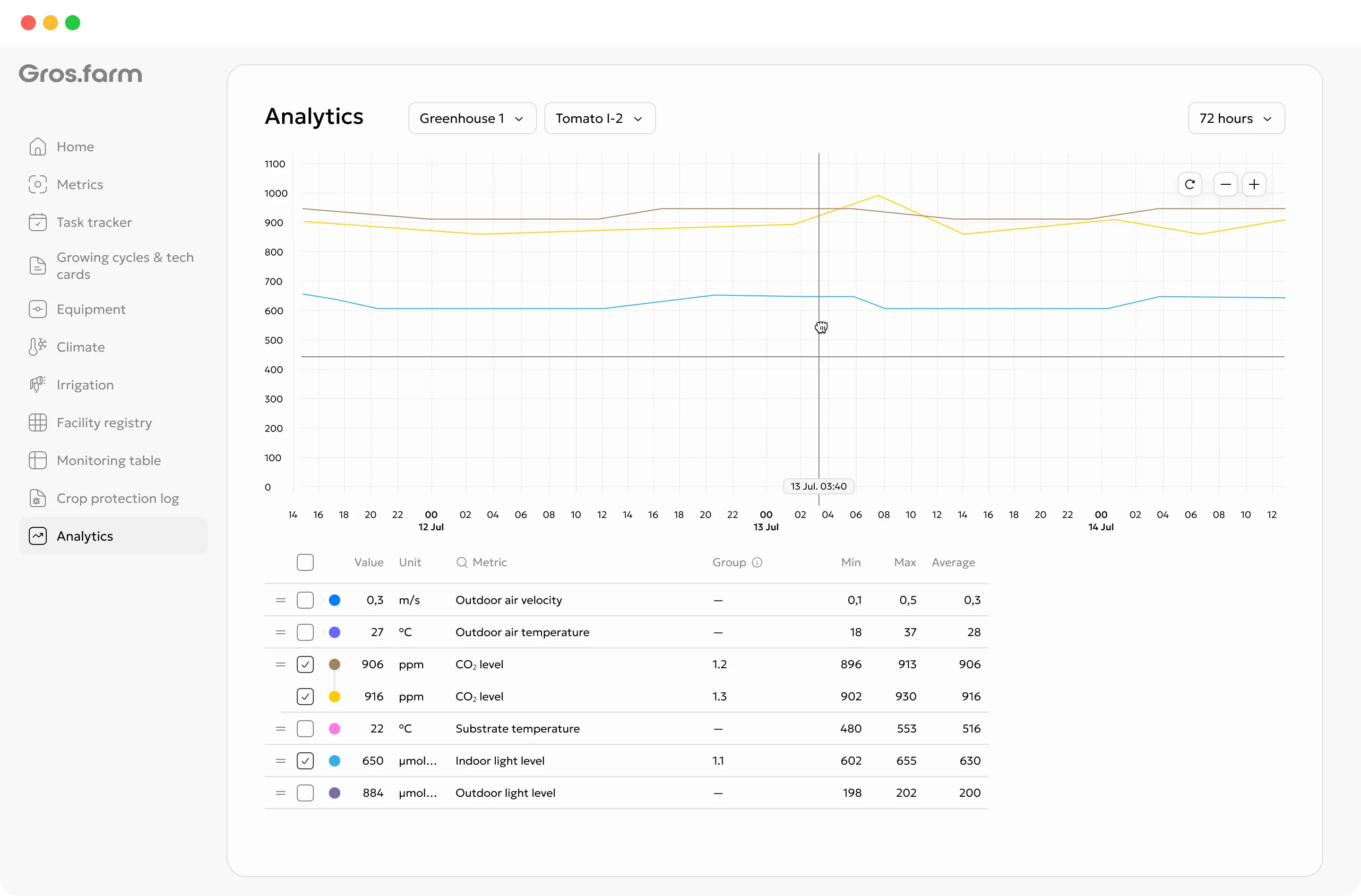
Track splits, losses, and completed transfers.
Compare only lots with a meaningful crop and process match.
Use the nursery’s own consistent readiness criteria.
Clear control boundary
Gros.farm does not replace PLCs, controllers, SCADA, or local safety scenarios. The local layer remains responsible for physical operation and safe autonomous control.
Pumps, valves, ventilation, lighting, dosing, interlocks, and emergency scenarios.
Stages, targets, schedules, tasks, data history, analytics, and supported configuration exchange.
Fit the production model
Configure stages and fields for the plant material and workflow instead of forcing all nursery products into one route.
Seed lots, trays, grafting, hardening, and dispatch readiness.
Provenance, propagation, grading, and transfer to orchard or vineyard.
Potting, spacing, pruning, movement, quality, and availability.
GFAi with farm context
GFAi can help locate incomplete records and compare suitable lots. It does not certify provenance, plant health, or regulatory compliance.
It does not replace the grower, agronomist, technologist, or controls engineer responsible for the decision.
Questions to investigate
Start with one working production contour
You do not need to digitize every site, crop, and integration at once. Start with one active cycle that the team can keep current.
Use the site, bench, bed, row, or container-zone structure the team knows.
Record origin, variety, quantity, current stage, and location.
Assign the work and update the location, count, and quality result.
Related production systems
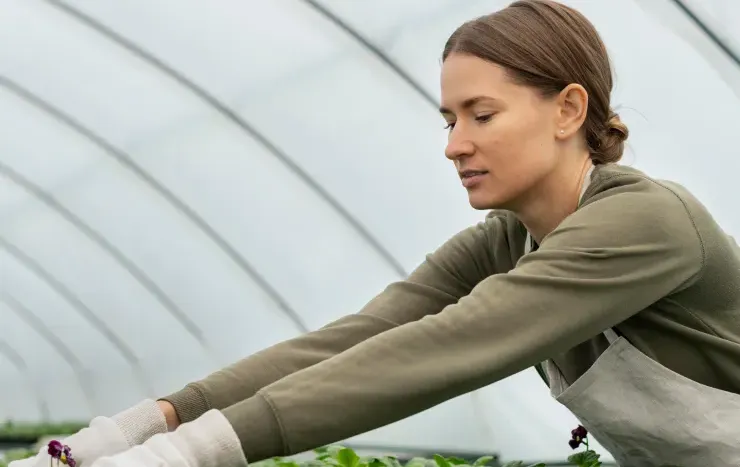 Protected cultivation
Connect crop stages, climate targets, irrigation, crop work, observations, and harvest results by greenhouse block.
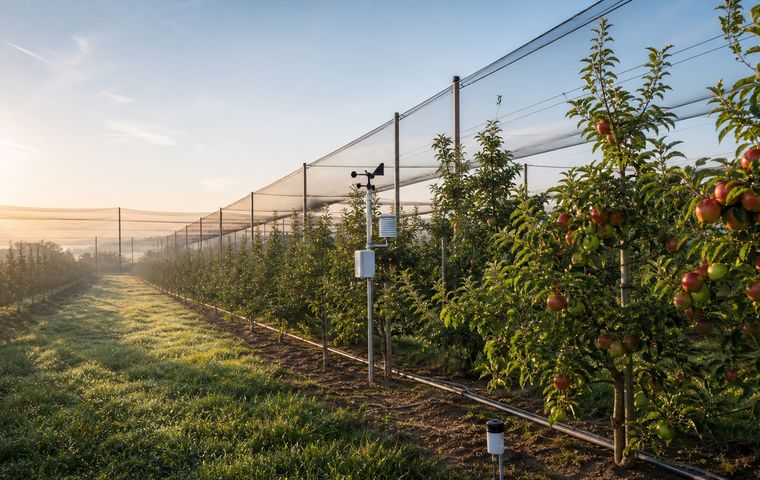 Perennial crops
Keep blocks, rows, varieties, phenology, scouting, crop protection, irrigation work, yield, and quality in one perennial history.
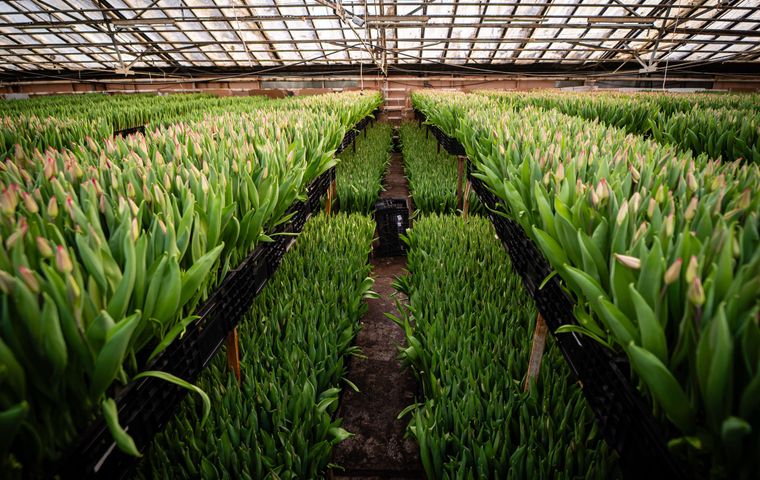 Cut flowers and ornamentals
Coordinate flower batches to a target market date with crop stages, climate context, work, cutting, grade, and actual output.
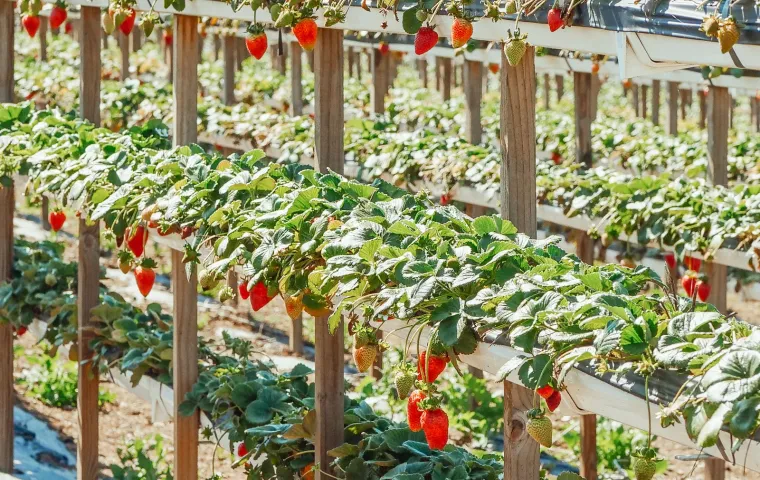 Field, tunnel, greenhouse, or indoor
Manage berry varieties, crop cycles, harvest waves, quality, tasks, and observations across different production formats.
Questions before setup
The farm structure and active-cycle records can represent lots or sublots at the level required for daily work. The exact setup should be agreed during configuration so the team can maintain it consistently.
Yes. Actual values can be updated as the lot is transplanted, graded, split, or reduced, preserving the production context for later analysis.
Yes. Cultivation plans are adapted to the product and facility. Vegetable seedlings, orchard material, and ornamentals do not need one universal process.
Gros.farm organizes production records. Legal certification, labeling, and regulatory compliance remain the nursery’s responsibility and depend on local requirements.
Propagation and planting material
Track plant lots, provenance, locations, transplants, recurring care, grading, losses, and readiness for sale or transfer.