Field, tunnel, house, row, or gutter
Use the physical unit where work is assigned and results are measured.
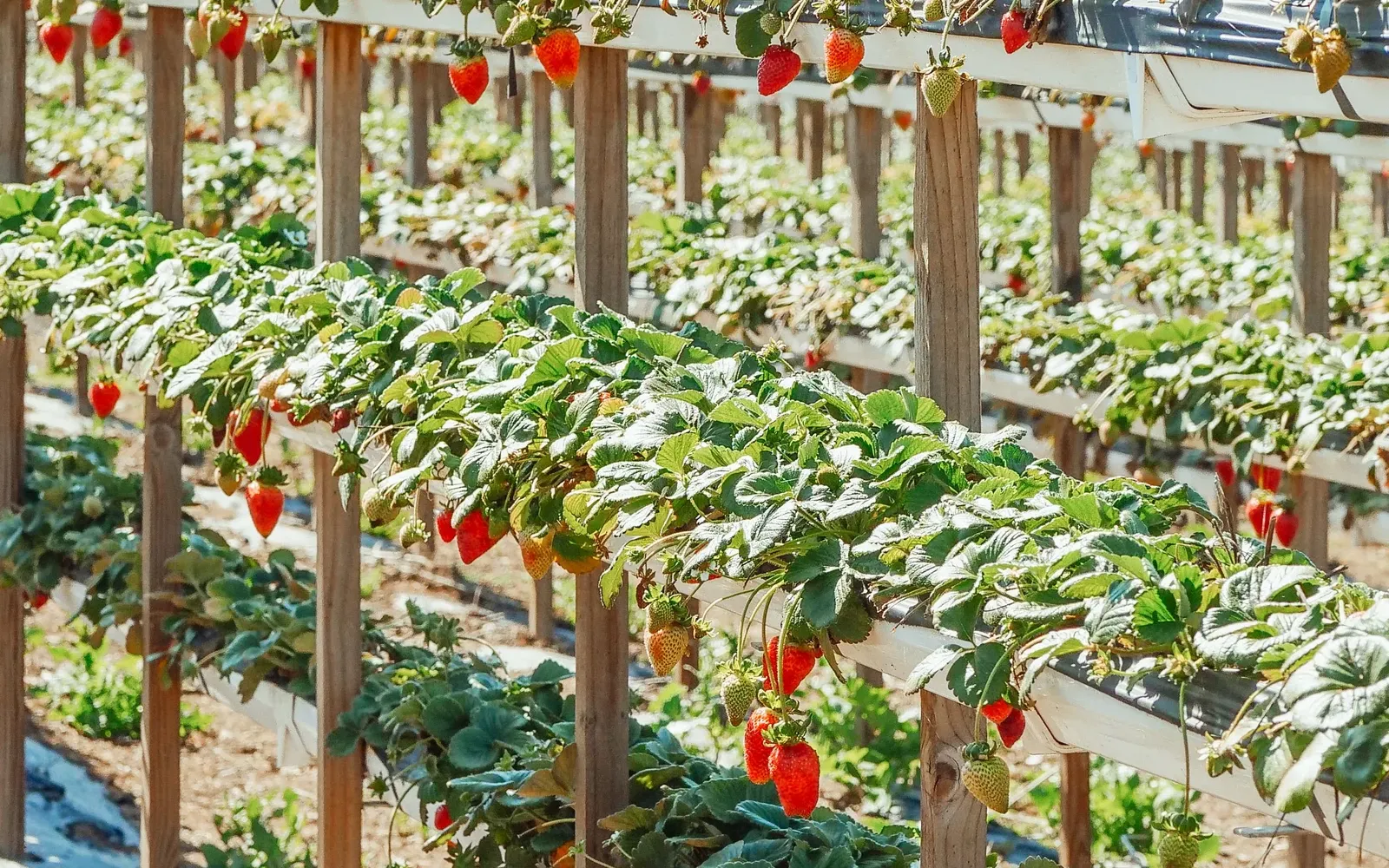
Gros.farm for berry production
Run berries in the field, tunnels, greenhouses, substrate systems, or indoor facilities without losing the differences between them. Connect varieties, crop stages, recurring work, harvest waves, quality, and the actual production environment.
Varieties and planting lots
Field, tunnel, and protected systems
Repeated harvest waves
Yield and quality by cycle
Production format matters
A tunnel, greenhouse gutter, open-field row, and indoor rack have different operating units and environmental context. The farm registry should reflect the real production layout.
Use the physical unit where work is assigned and results are measured.
Keep lot and establishment data with the active crop cycle.
Follow flowering, fruit development, picking waves, and plant condition.
Compare harvest waves within the same crop and production format.
Farm registry
Keep facilities, production areas, active crops or lots, and growing cycles in one structure. The registry gives tasks, observations, metrics, and analytics a shared place and production context.
Explore the farm registry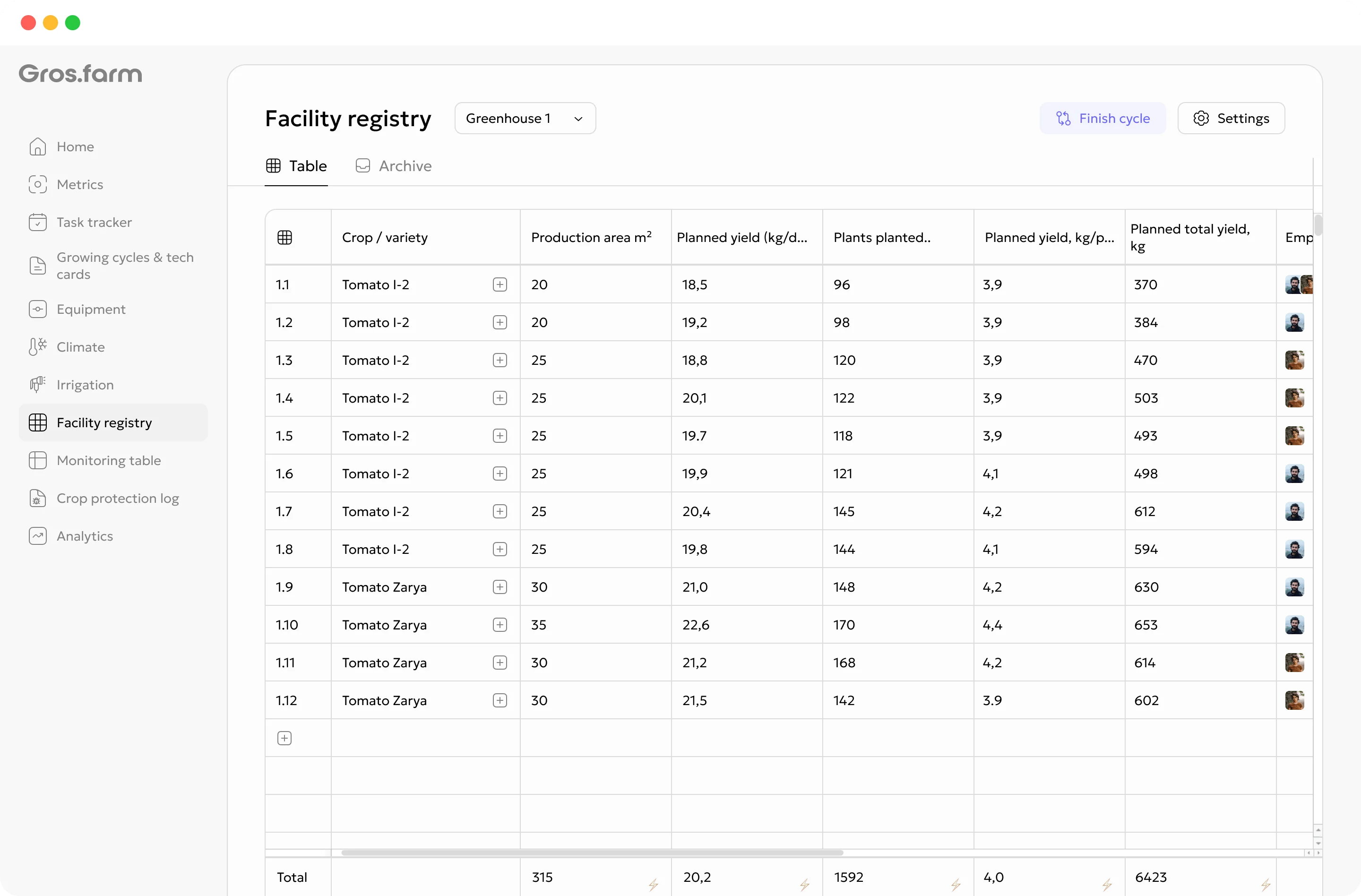
Berry crop stages
Configure the stages for the crop type, planting material, production system, and farm practice. Keep target ranges and work tied to the active stage.
Record plants, source lot, density, location, and actual planting date.
Track plant growth, canopy work, rooting, and recurring care.
Follow flowering progression, pollination context, and crop observations.
Record fruit development, load, irrigation, and protection work.
Coordinate picking, labor, output, and quality across repeated dates.
Review the complete result before archiving or renewing the crop cycle.
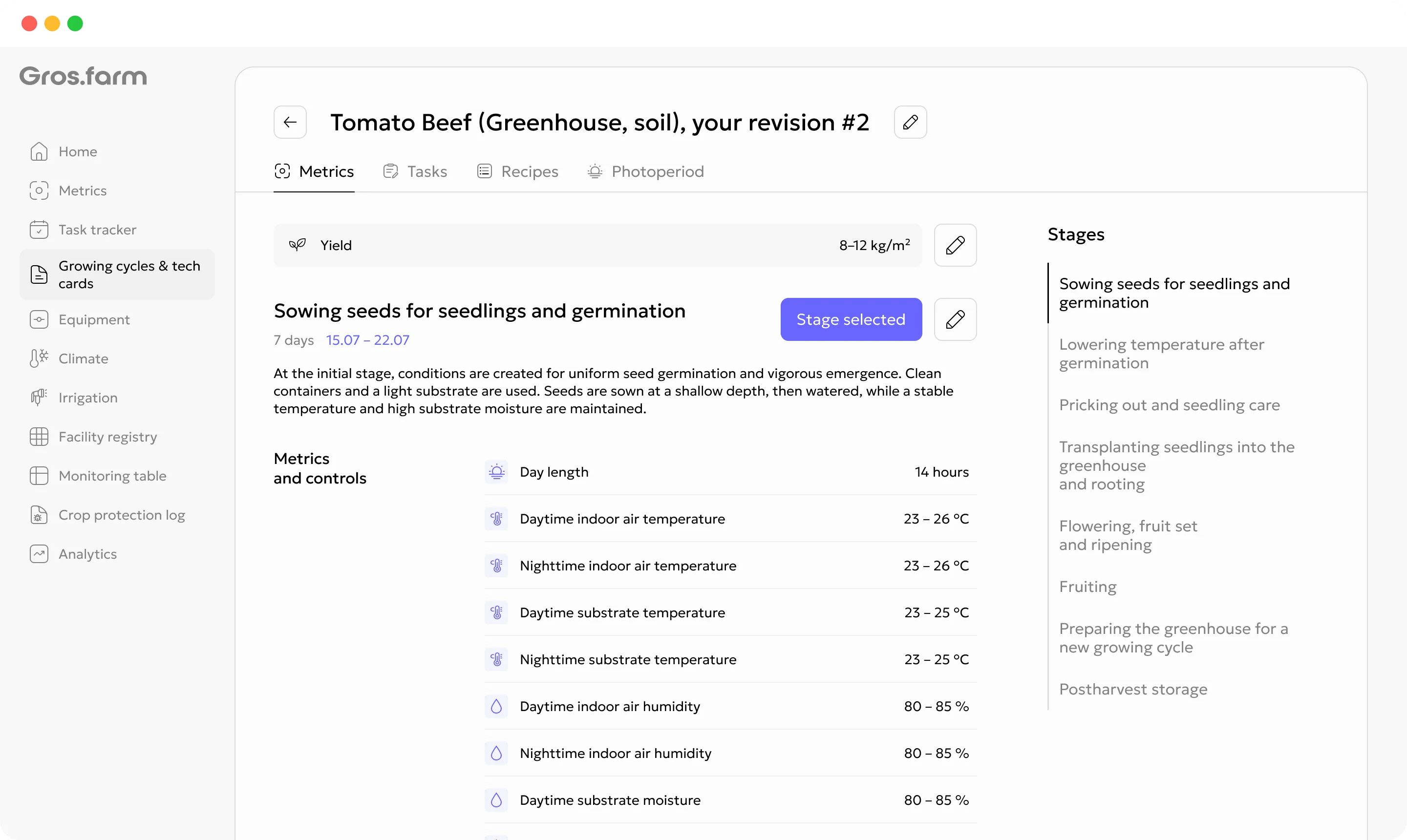
Cultivation plans
A cultivation plan can hold stages, target ranges, recurring work, recipes, photoperiod, and other production parameters. Templates are starting points, not universal recommendations: review every plan for the crop, facility, equipment, and production objective.
Explore digital crop plansDaily berry operations
Scouting, pruning, runner removal, irrigation checks, protection, picking, and grading should carry the exact place and crop context.
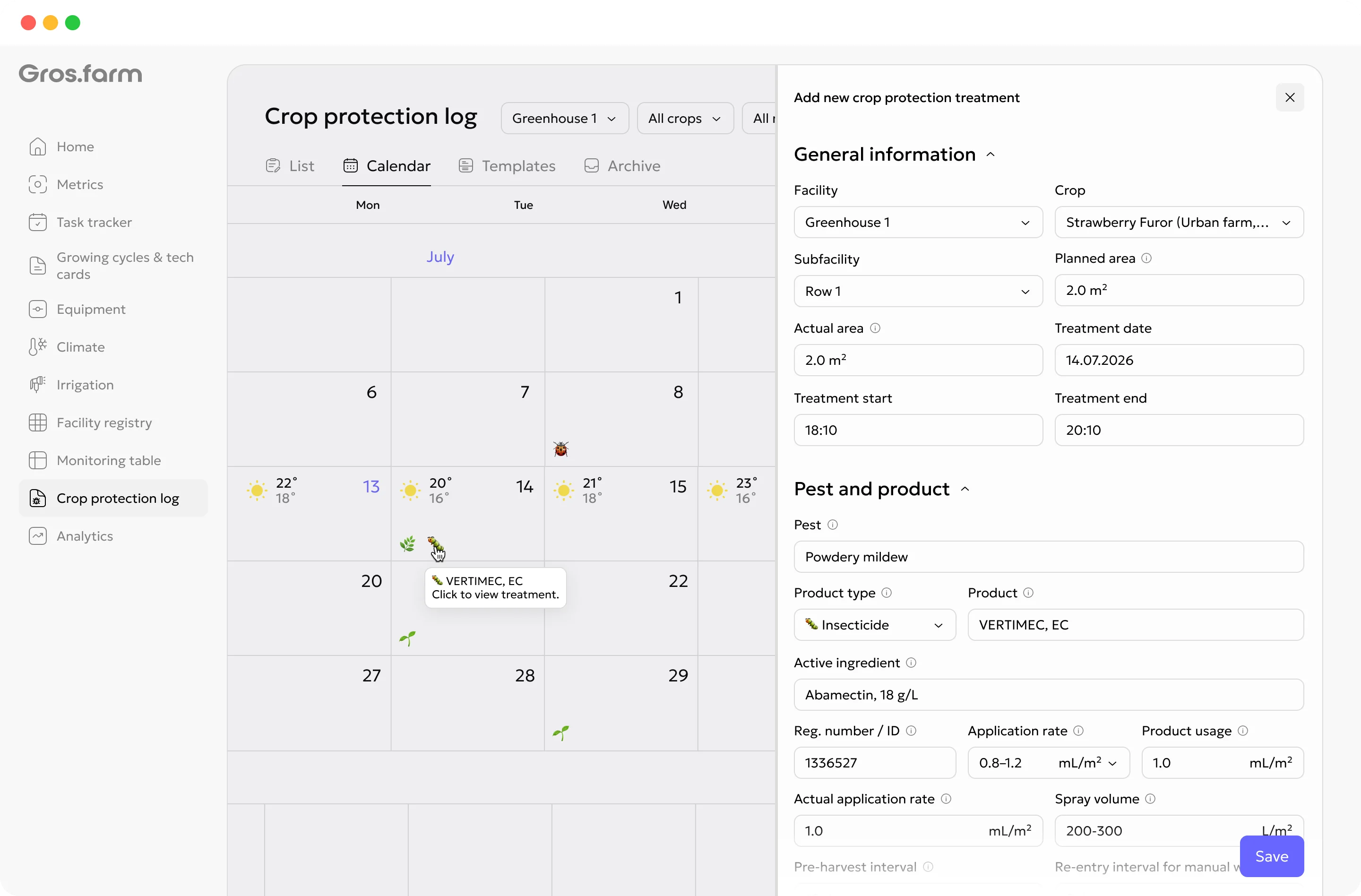
Use photos, comments, manual values, and connected climate data where available.
Assign the correct production area, expected window, and handling instruction.
Separate total output from marketable quality and rejected product.
Keep the issue, assignee, deadline, and completion status in the crop history.
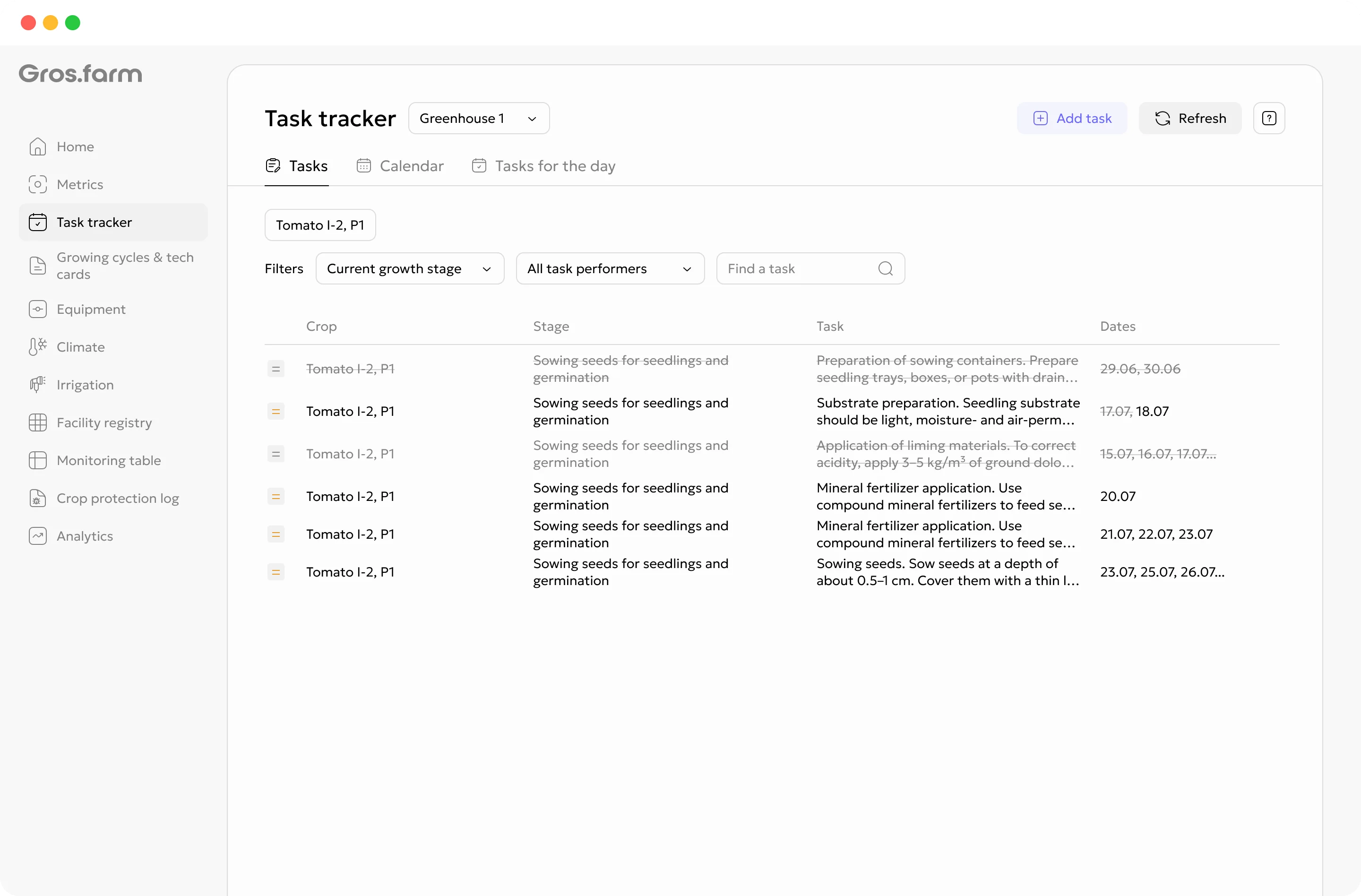
Tasks carry the facility, growing cycle, cultivation-plan stage, date, priority, instruction, and assignee—not just a title and deadline.
Explore tasks and team →Monitoring and crop observations
Add manual observations, key dates, photos, comments, and available automatic or calculated values to the active growing cycle. A shorter, consistently updated monitoring set is more useful than a large table the team cannot maintain.
Production analytics
Do not combine tunnel, field, and greenhouse results without their context. Use comparable production units, cycles, and harvest definitions.
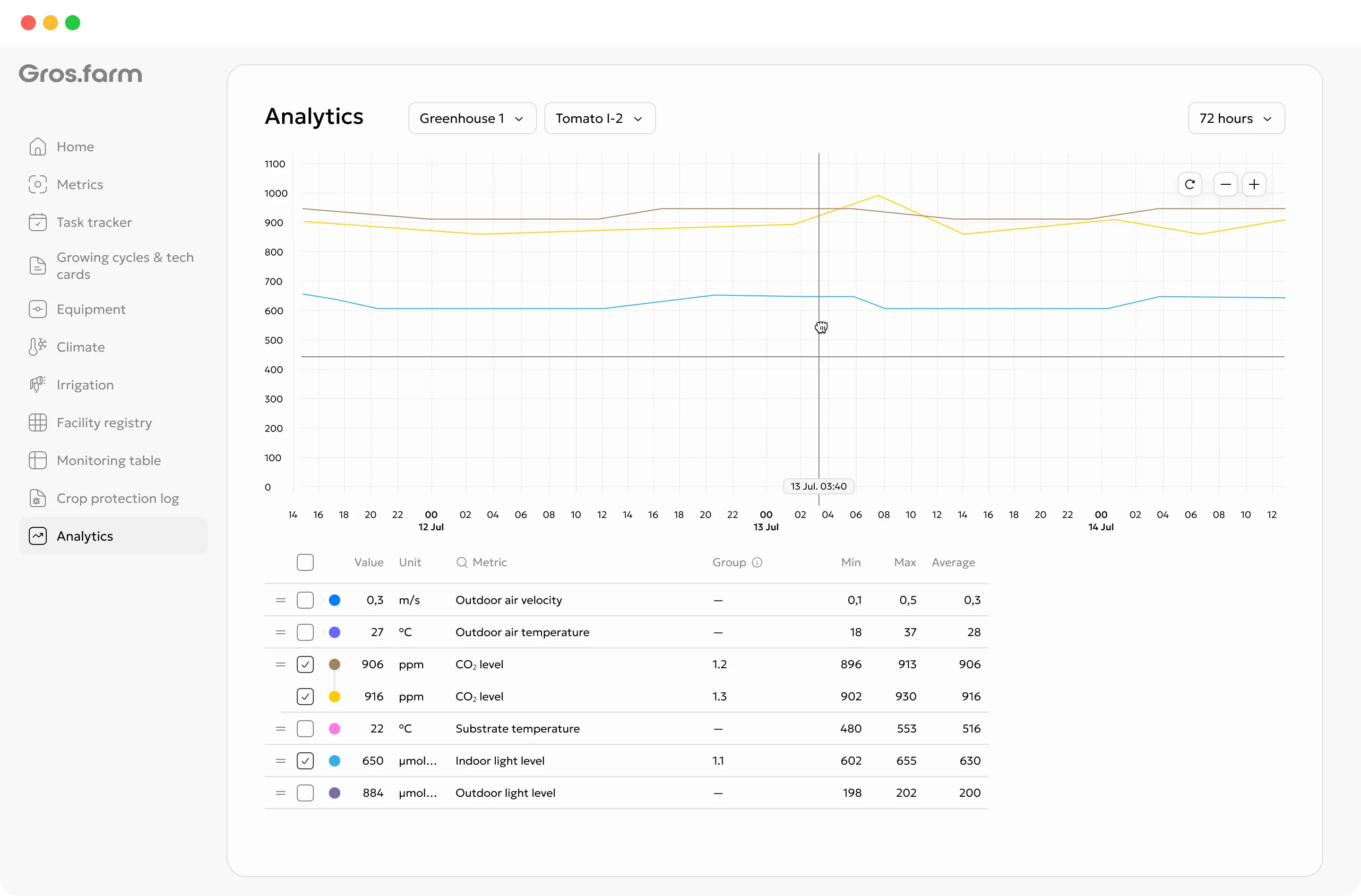
Compare stage timing by variety and production format.
Review both the curve and the total result.
Keep quality categories consistent across the comparison.
Clear control boundary
Gros.farm does not replace PLCs, controllers, SCADA, or local safety scenarios. The local layer remains responsible for physical operation and safe autonomous control.
Pumps, valves, ventilation, lighting, dosing, interlocks, and emergency scenarios.
Stages, targets, schedules, tasks, data history, analytics, and supported configuration exchange.
Fit the production model
The platform remains shared, while the registry, stages, tasks, and metrics follow the actual production environment.
Weather windows, field work, protection, repeated harvest, and quality.
Crop stages, climate context, irrigation, crop work, and picking waves.
Batches, recipes, pH and EC context, lighting where relevant, and output.
GFAi with farm context
GFAi can help find gaps and comparable histories, but a detected association is not proof that one factor caused a crop result.
It does not replace the grower, agronomist, technologist, or controls engineer responsible for the decision.
Questions to investigate
Start with one working production contour
You do not need to digitize every site, crop, and integration at once. Start with one active cycle that the team can keep current.
Choose a field block, tunnel, greenhouse zone, or substrate row.
Record variety, plant source, stage, and the next recurring operations.
Assign work and record timing, output, quality, and observations.
Related production systems
 Protected cultivation
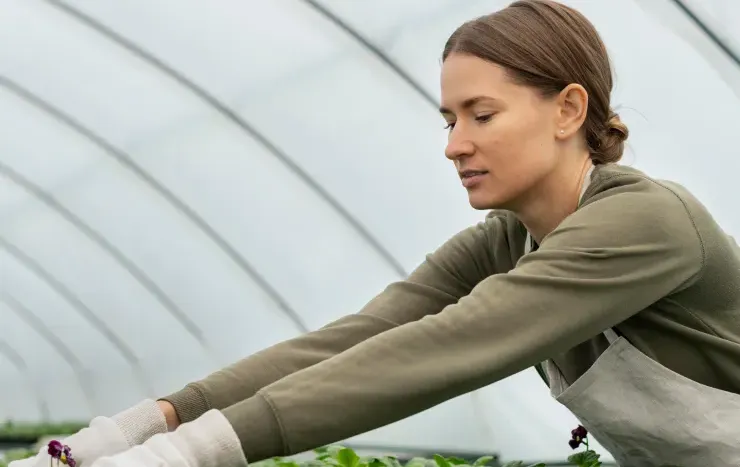
Connect crop stages, climate targets, irrigation, crop work, observations, and harvest results by greenhouse block.
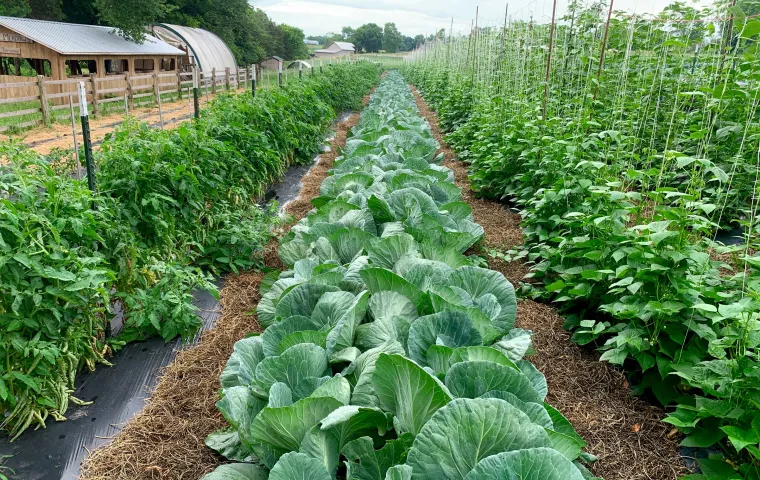 Open-field production
Coordinate fields, crop plans, weather-sensitive work, crop protection records, harvest waves, and field results.
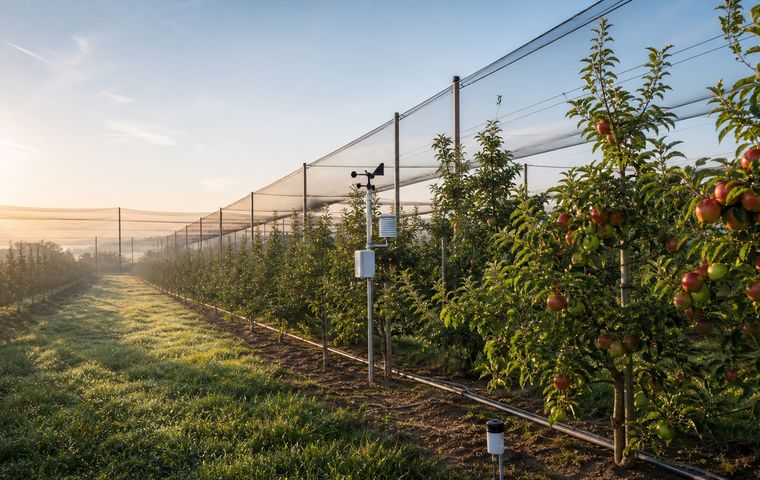 Perennial crops
Keep blocks, rows, varieties, phenology, scouting, crop protection, irrigation work, yield, and quality in one perennial history.
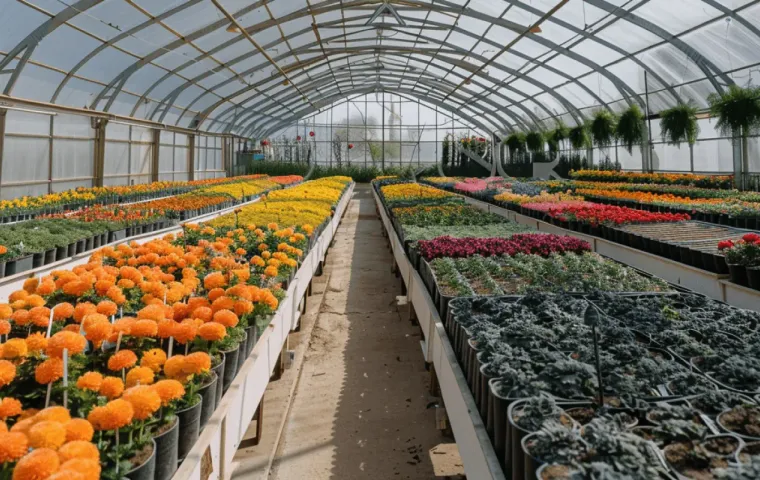 Propagation and planting material
Track plant lots, provenance, locations, transplants, recurring care, grading, losses, and readiness for sale or transfer.
Questions before setup
Yes. Use separate production areas and cycles so each format keeps its own structure, stage logic, observations, and results.
Yes. Harvest dates, output, and quality can be recorded across the active cycle and reviewed with other production events.
No. The registry, cultivation plan, tasks, manual observations, and harvest records can be used first. Add data sources later when they support a defined decision.
No. Plans and target ranges must be adapted to the crop, variety, planting material, production format, equipment, and farm practice.
Field, tunnel, greenhouse, or indoor
Manage berry varieties, crop cycles, harvest waves, quality, tasks, and observations across different production formats.