
Block 3 is behind the current stage plan
Two required observations are missing. A site inspection is due before 12:00.
 Production context for AI
General-purpose AI knows broad agricultural information. GFAi is designed to give existing AI models the permitted context of a specific operation: facilities, crops, stages, targets, readings, work, people, events, and production history.
What needs my attention today, and which conclusions still need verification?
Two required observations are missing. A site inspection is due before 12:00.
The event overlaps with limited ventilation, but the cause has not been confirmed.
Assignee, deadline, and inspection checklist are ready for manager review.
The context layer
A standalone file or chat message describes only part of the situation. Gros.farm connects the operating structure, the current crop technology, actual data, completed work, and the result.
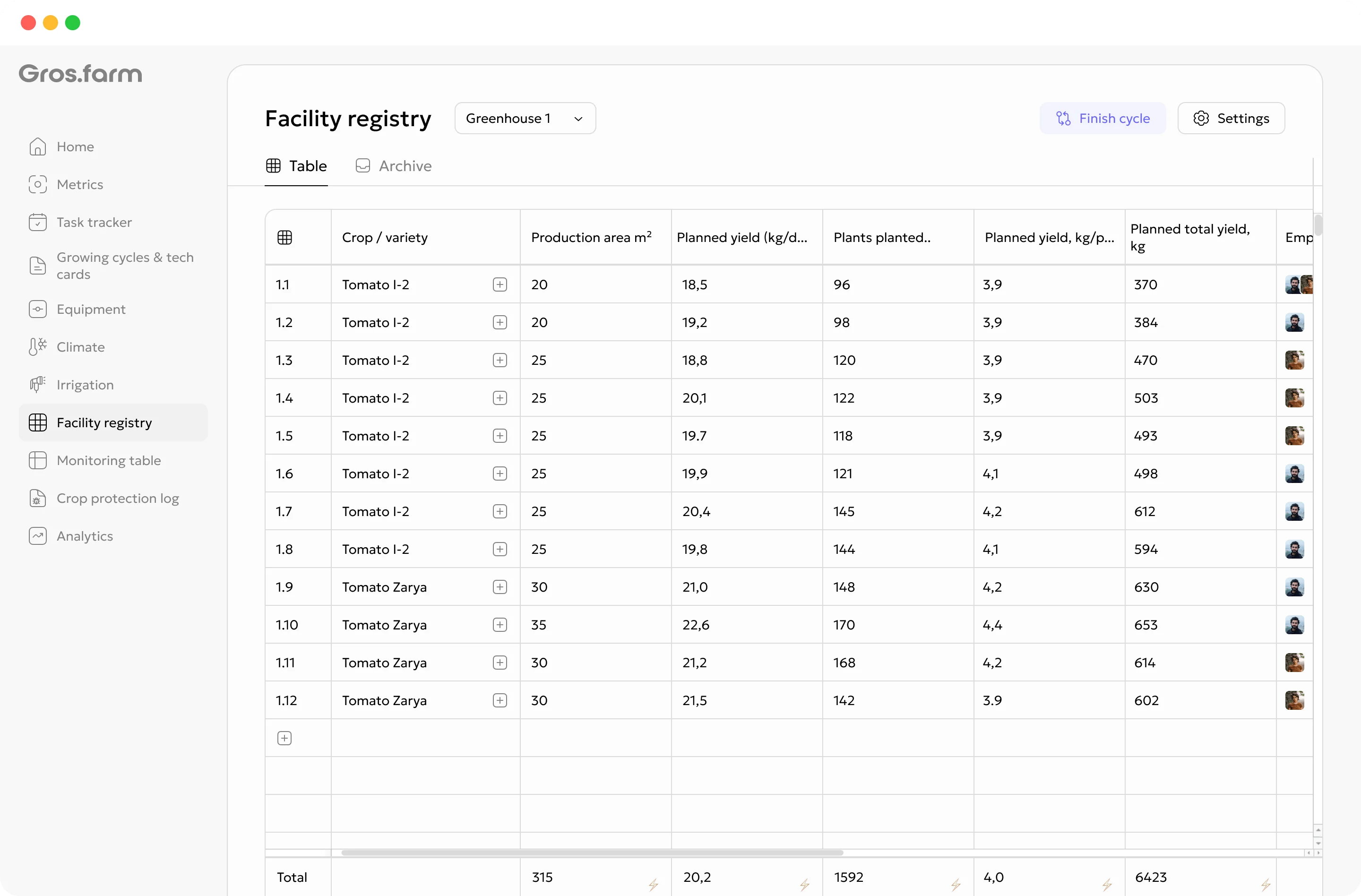
Organization, site, facility, block, section, zone, crop batch, and responsible people.
Current stage, reviewed targets, required work, instructions, recipes, and checkpoints.
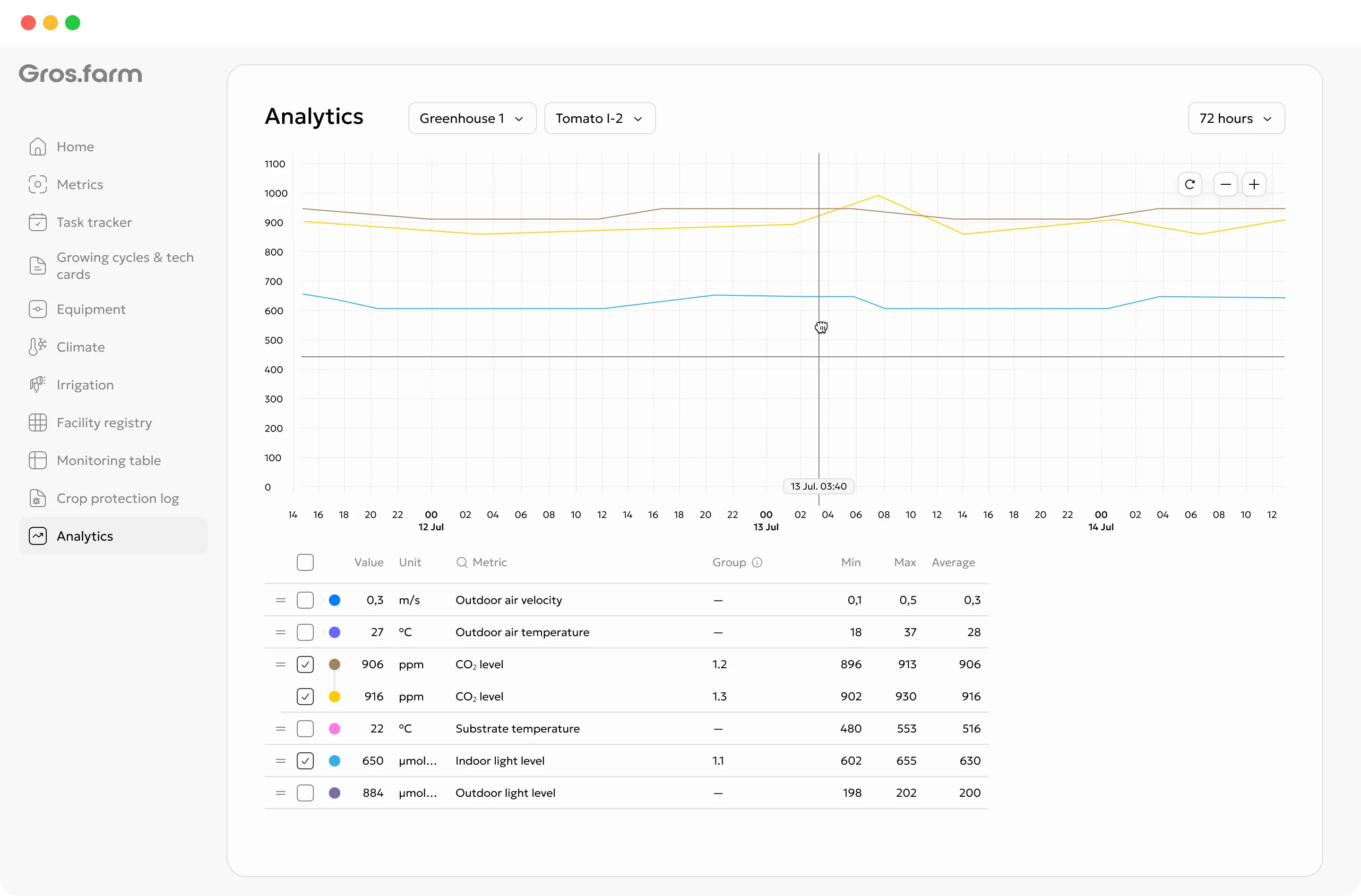
Manual readings, sensors, weather, calculated values, photos, comments, and events.
Assignments, dates, instructions, statuses, completion, and missed updates.
Plan versus actual, output, quality, losses, deviations, decisions, and completed cycles.
From answer to finished work
A practical scenario can end with a concise briefing, a comparison, a checked spreadsheet, a document, or a draft task that a responsible person reviews before anything changes.
Summarize the facilities and periods that need attention without manually opening every screen.
Relate actual values and events to the current stage and comparable historical periods.
Turn the analysis into a concise briefing, checked file, document, or expert handoff.
Prepare a draft task, verification plan, or preview of a change for the responsible person.
Preserve what was proposed, what the team actually did, and the resulting production outcome.
Product foundation
You do not need every sensor on day one. Start with one facility, its active cycle, a reviewed cultivation plan, current work, and a small monitoring set. Integrations can be added where they improve a defined decision or workflow.
Controlled workflow
GFAi is designed around traceable evidence, explicit uncertainty, role permissions, and confirmation before changes are applied.
A metric deviation, overdue task, observation, event, or user question.
The system selects only the permitted facilities, periods, and data required for the question.
Relevant targets, actual values, work, events, and history are attached to the analysis.
Facts, missing data, and possible explanations are presented separately.
A briefing, document, task, or preview is prepared without silently changing production.
A responsible person reviews the action; completion and outcome remain in the history.
Different roles, different useful outputs
“What threatens the production plan today, and where is my decision required?”
A short briefing with facts, unknowns, responsible people, and next checks.
“Which work is late, and where is the team capacity insufficient?”
An operational view of deadlines, resource conflicts, and draft assignments.
“How does this cycle differ from the previous comparable cycle?”
A stage-aware comparison, timeline, missing observations, and questions to verify.
“What exactly should I do today?”
A concise instruction with the location, date, scope, and expected confirmation.
Responsible use
Agricultural production combines biology, people, equipment, and incomplete data. The system must preserve the distinction between an observed fact, a possible explanation, and an approved action.
The output shows which facilities, periods, targets, readings, tasks, and events support it.
Coinciding events are not presented as a proven cause, and missing information is called out.
The model receives only permitted data and can prepare only actions appropriate for the role.
Production changes appear as a preview or draft and require approval by a responsible person.
Availability and rollout
Gros.farm already structures facilities, crop plans, cycles, metrics, tasks, monitoring, analytics, and integrations. GFAi scenarios progress from reading and preparation toward confirmed actions. The current capabilities, pilots, and data requirements should be checked with the team during a demo.
Registry, crop plans, cycles, metrics, tasks, monitoring, analytics, and integrations create structured farm data.
Operational summaries, missing-data checks, comparisons, documents, spreadsheets, and expert handoffs.
AI prepares a task or change, while the responsible user reviews and applies it through the product workflow.
Decisions, completed actions, and crop-cycle outcomes can support more meaningful future comparisons.
Questions about GFAi
No. GFAi is the context and workflow layer designed to connect existing AI models with permitted farm data, controlled actions, and production history.
A chat can be one interface, but the useful product is broader. The AI works with the specific organization’s facilities, crops, stages, targets, readings, tasks, and history and can prepare a finished work artifact.
A file covers only part of the operation and quickly becomes outdated. Gros.farm keeps the current facility structure, crop stage, targets, actual data, team actions, and results connected over time.
No. Start with one facility, a current crop cycle, reviewed crop plan, tasks, manual observations, and weather data. Add sensors where they improve a defined scenario.
No. AI can assemble evidence, compare periods, identify missing data, and prepare a draft. Biological interpretation, responsibility, and final production decisions remain with specialists.
Critical changes should not be applied without control. AI may explain an exception or prepare a proposal, but a responsible person reviews the action and local automation remains the source of physical reliability and safety.
The Gros.farm production context is available today. AI scenarios are being introduced in stages. The current set of capabilities, pilots, and data requirements should be confirmed during a demo.
Start with a real scenario
We will map the required context, responsible role, output, review step, and what must remain outside the AI workflow.