
Farm → block → row → zone
Represent orchard blocks, vineyard parcels, rows, and management zones.
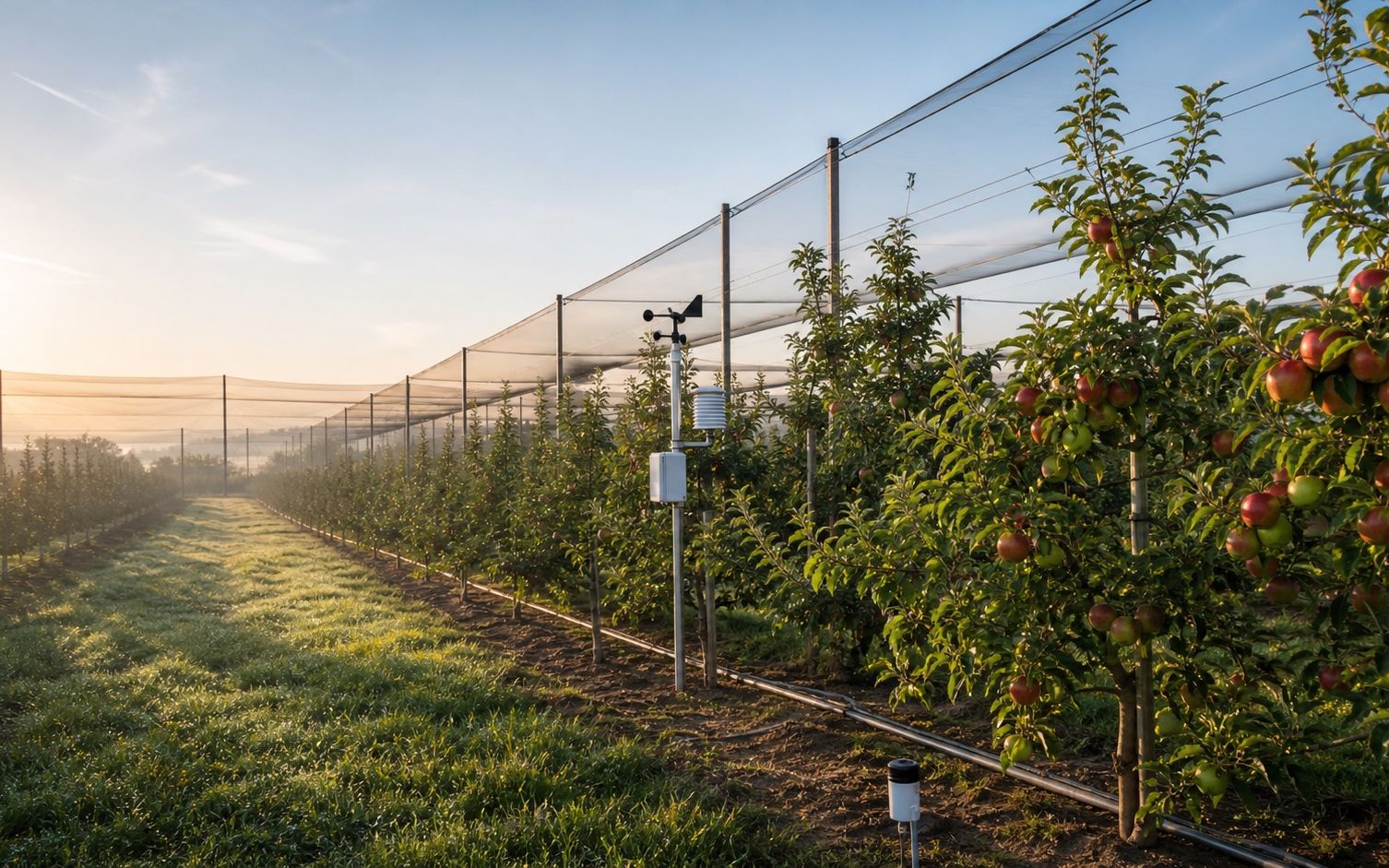
Gros.farm for orchards and vineyards
Connect orchard or vineyard structure with varieties, phenology, scouting, planned work, crop-protection records, harvest, and quality. Preserve the production history across seasons instead of rebuilding it from spreadsheets and chats.
Blocks and rows
Phenology by variety
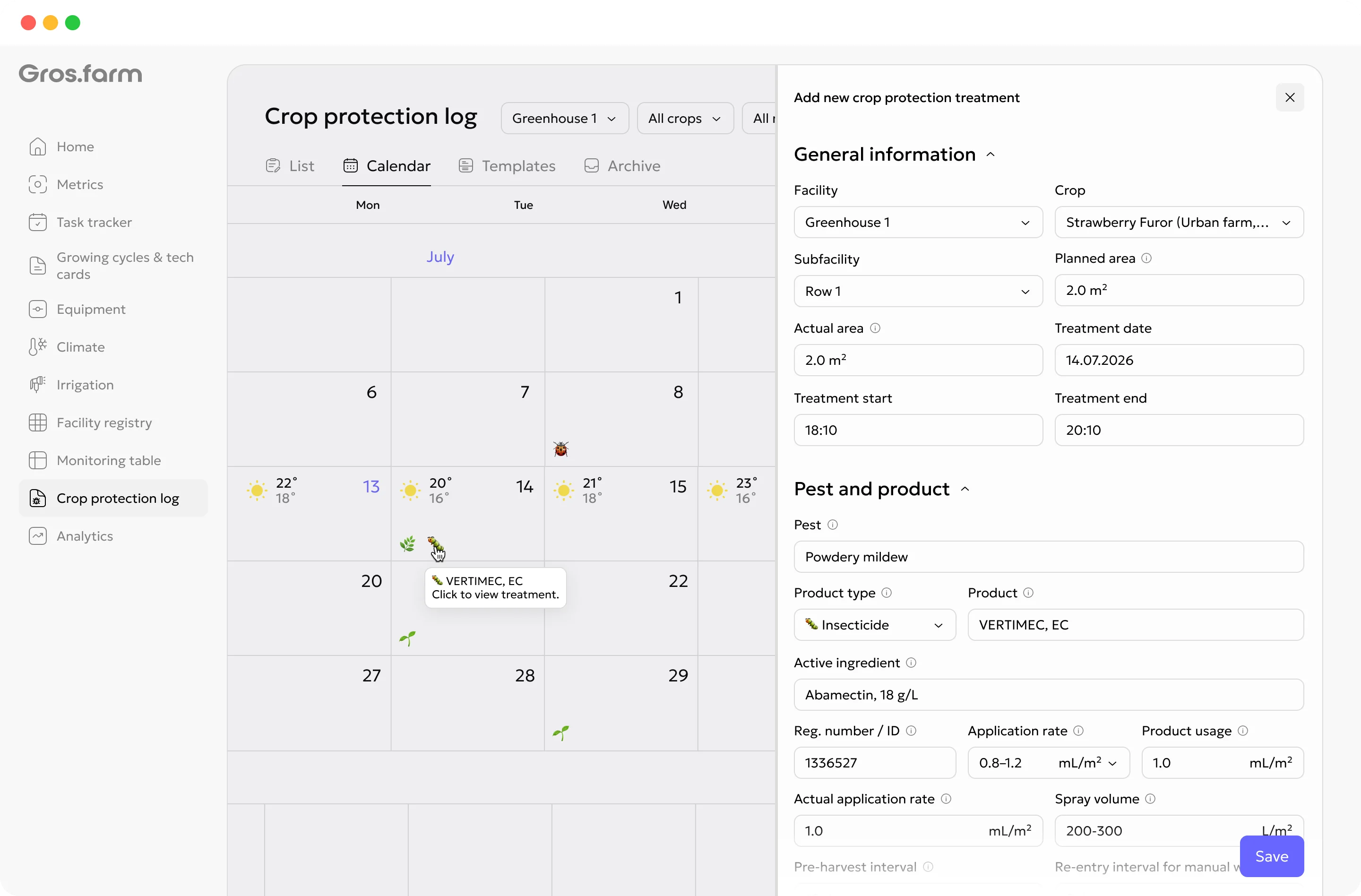
Scouting and crop protection
Yield and quality by season
A perennial production record
The same weather event or treatment can affect blocks differently. Meaning comes from the block, cultivar or clone, phenological stage, crop load, irrigation context, and work history.
Represent orchard blocks, vineyard parcels, rows, and management zones.
Keep permanent planting information separate from the current season cycle.
Track how the active season progresses in each block.
Retain comparable block-level results and the context behind them.
Farm registry
Keep facilities, production areas, active crops or lots, and growing cycles in one structure. The registry gives tasks, observations, metrics, and analytics a shared place and production context.
Explore the farm registry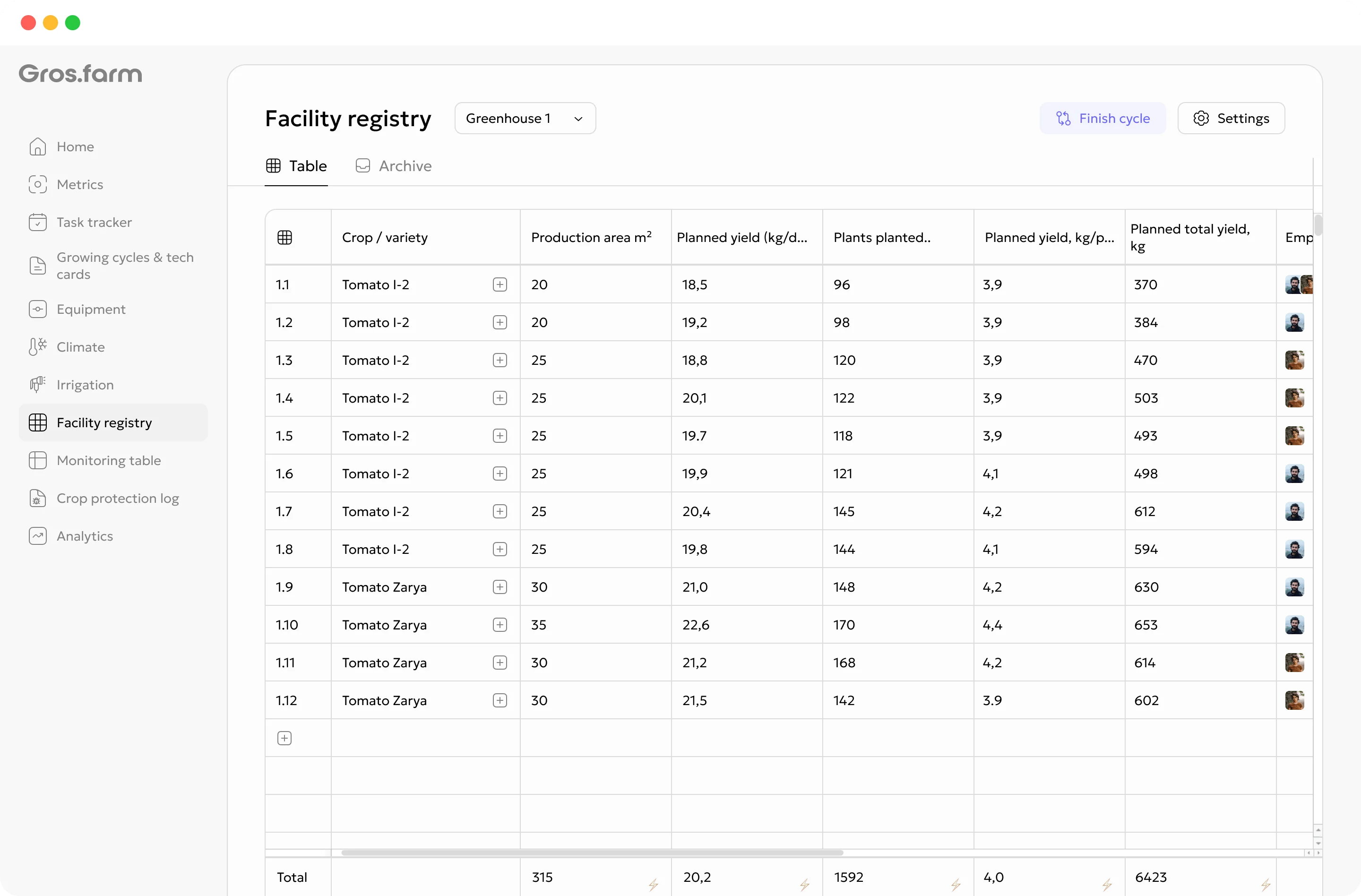
Phenology as the operating timeline
Calendar dates matter, but the same operation may be timely in one block and premature in another. Use phenological stages and actual observations to anchor the season.
Record pruning, winter protection, and the starting condition of the block.
Track stage progression, frost risk context, and early inspections.
Coordinate observations, pollination context, and sensitive operations.
Record crop load, thinning work, and early quality signals.
Follow growth, irrigation, nutrition, protection, and quality indicators.
Capture actual dates, output, grade, and block-level conclusions.
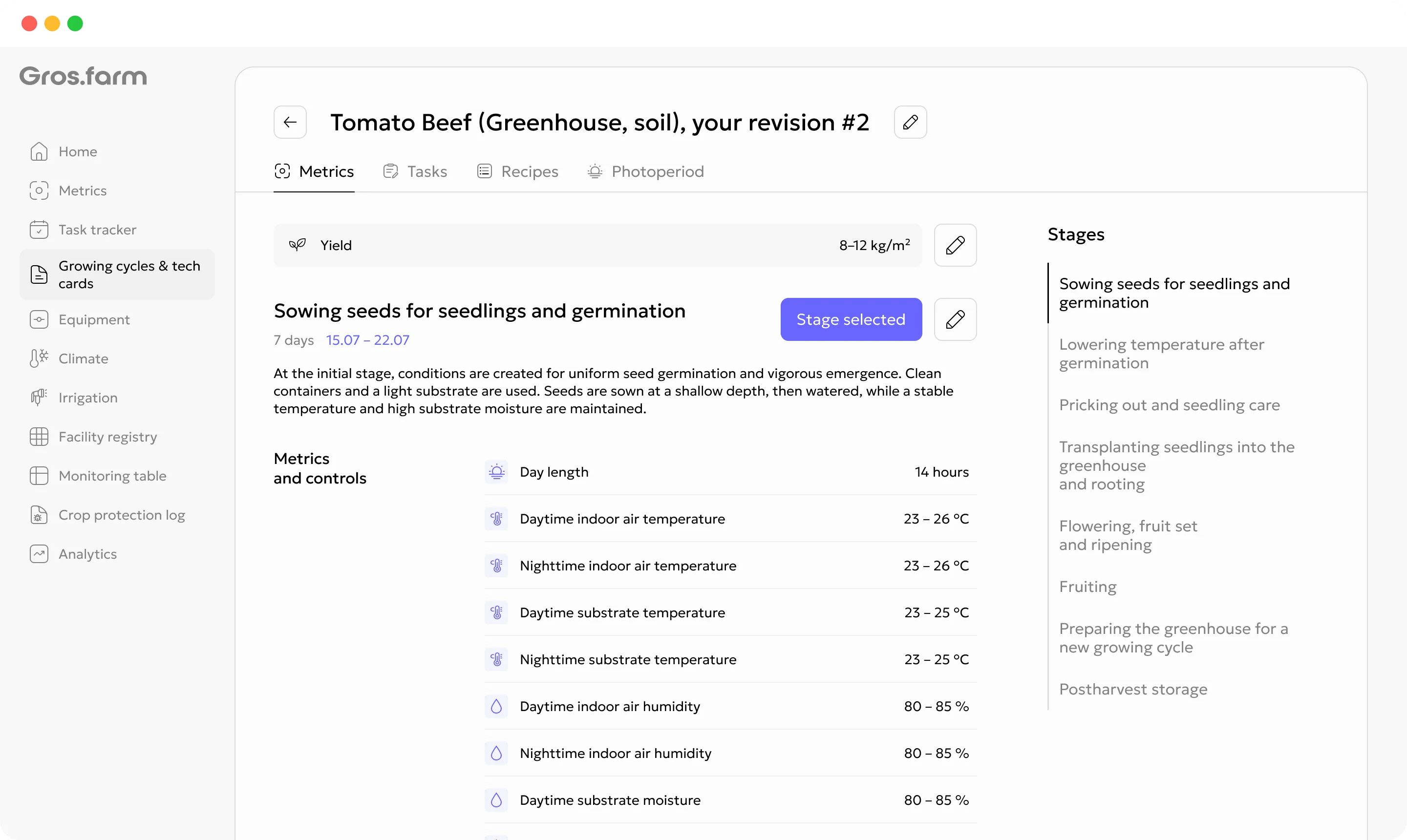
Cultivation plans
A cultivation plan can hold stages, target ranges, recurring work, recipes, photoperiod, and other production parameters. Templates are starting points, not universal recommendations: review every plan for the crop, facility, equipment, and production objective.
Explore digital crop plansField execution
Pruning, scouting, trap checks, irrigation inspection, crop protection, and harvest preparation should remain tied to the location and season they affect.
Keep the symptom, photo, stage, and follow-up action in context.
Record the target area, product, rate, conditions, and responsible person.
Send the location, date, priority, and instructions with the task.
Keep issues and completed work tied to the affected zone.
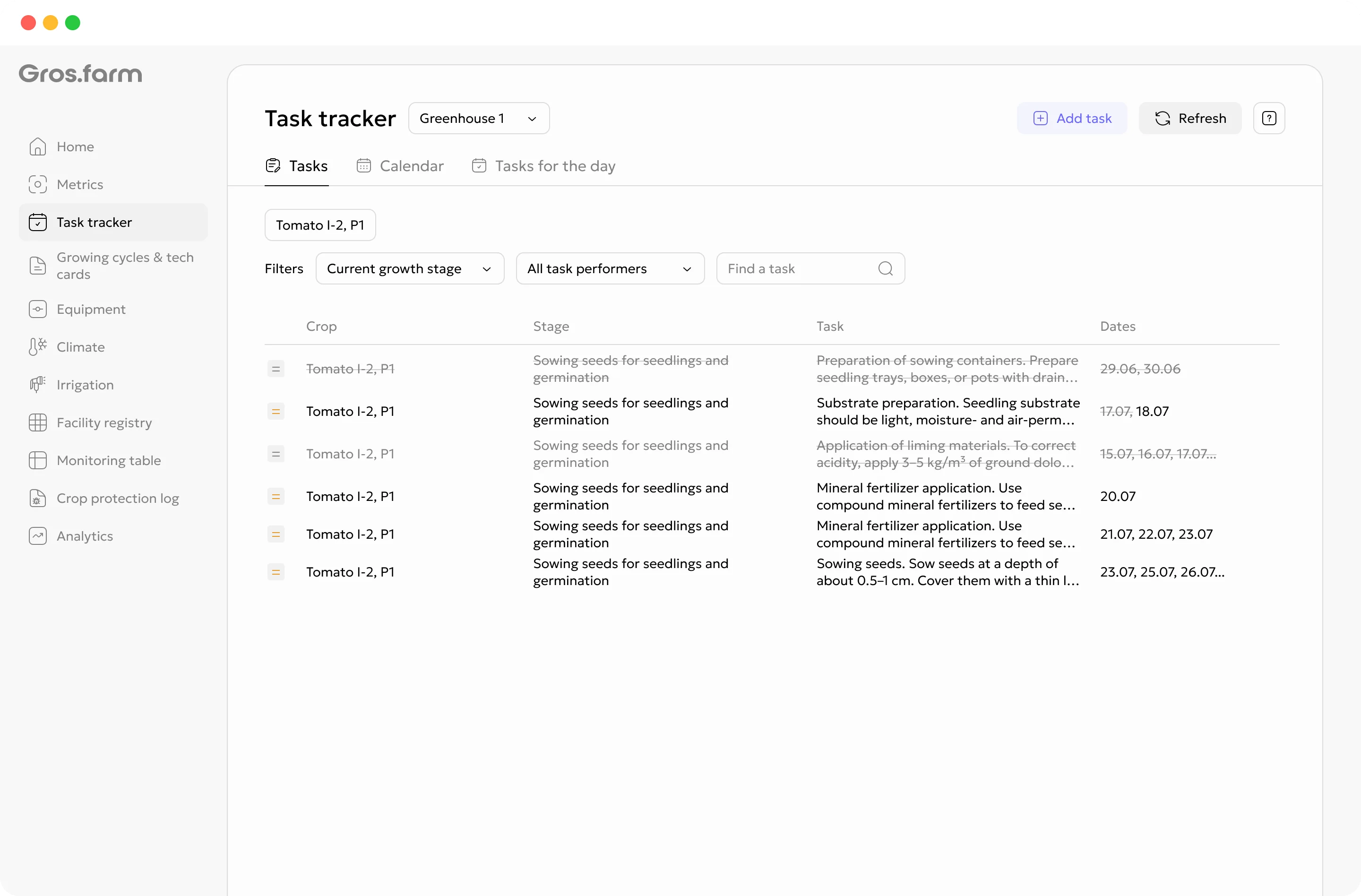
Tasks carry the facility, growing cycle, cultivation-plan stage, date, priority, instruction, and assignee—not just a title and deadline.
Explore tasks and team →Monitoring and crop observations
Add manual observations, key dates, photos, comments, and available automatic or calculated values to the active growing cycle. A shorter, consistently updated monitoring set is more useful than a large table the team cannot maintain.
Production analytics
Yield alone does not explain performance. Review phenology, observations, weather or sensor context, operations, and quality alongside the result.
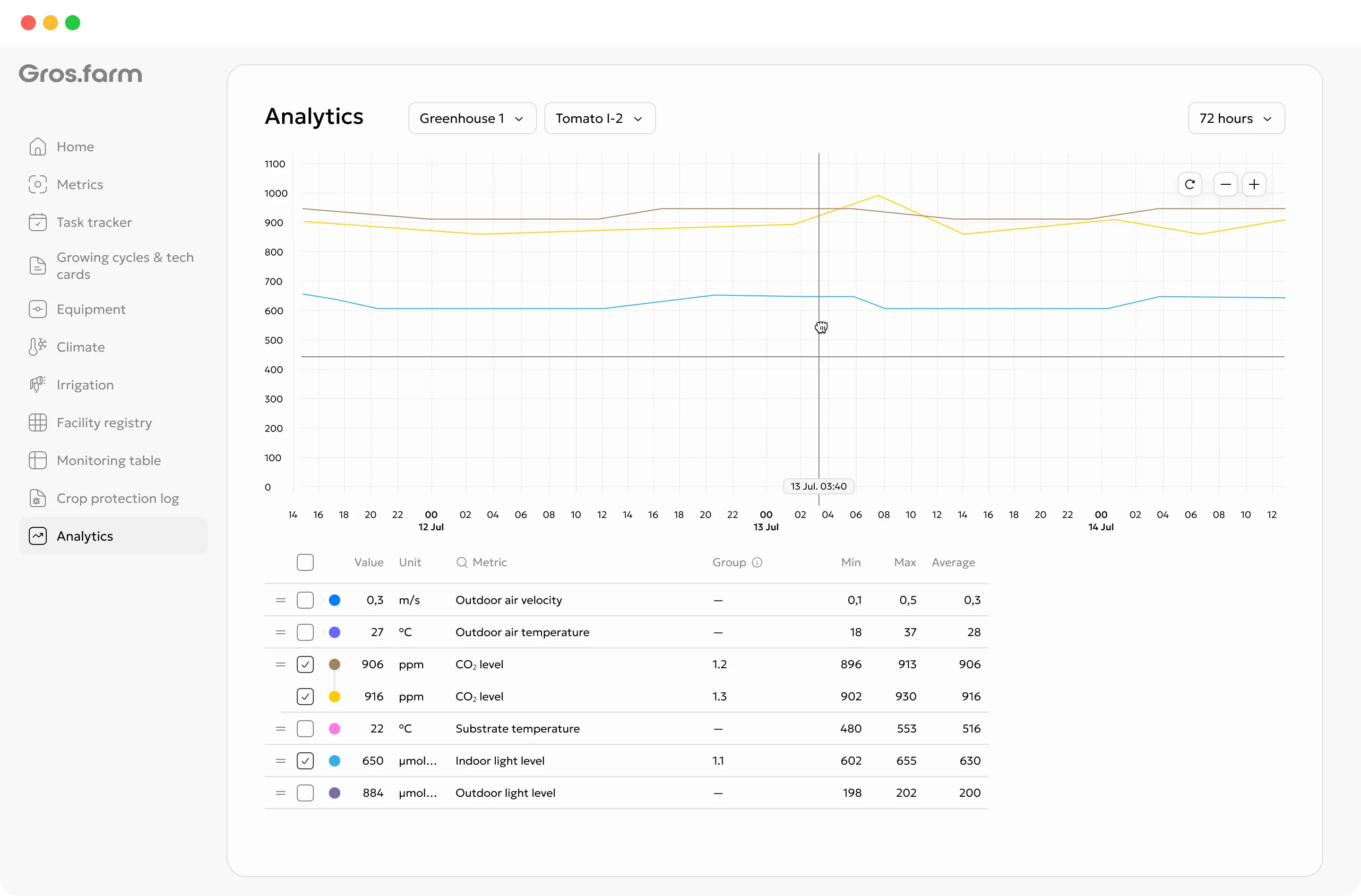
Compare timing only for meaningful crop and site groups.
Keep units and harvested area definitions consistent.
Use the quality scheme that matches the crop and market.
Clear control boundary
Gros.farm does not replace PLCs, controllers, SCADA, or local safety scenarios. The local layer remains responsible for physical operation and safe autonomous control.
Pumps, valves, ventilation, lighting, dosing, interlocks, and emergency scenarios.
Stages, targets, schedules, tasks, data history, analytics, and supported configuration exchange.
Fit the production model
Adapt the registry, stages, observations, and quality fields to the farm rather than forcing orchards and vineyards into one generic crop template.
Blocks, rootstocks, varieties, canopy work, crop load, harvest, and grade.
Canopy operations, protection, irrigation, maturity, and harvest lots.
Shared people and analytics with a separate operating context for each block.
GFAi with farm context
GFAi can help surface missing records and compare relevant block histories. It cannot diagnose a crop issue or prove causation without expert review.
It does not replace the grower, agronomist, technologist, or controls engineer responsible for the decision.
Questions to investigate
Start with one working production contour
You do not need to digitize every site, crop, and integration at once. Start with one active cycle that the team can keep current.
Include the rows or management zones that matter for work and analysis.
Add the crop, variety, stage, upcoming work, and key observations.
Keep actual work, stage dates, yield, and quality in one history.
Related production systems
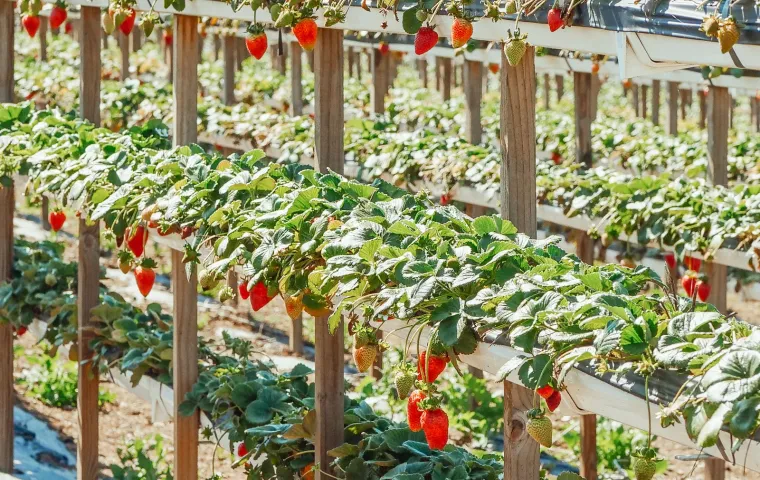 Field, tunnel, greenhouse, or indoor
Manage berry varieties, crop cycles, harvest waves, quality, tasks, and observations across different production formats.
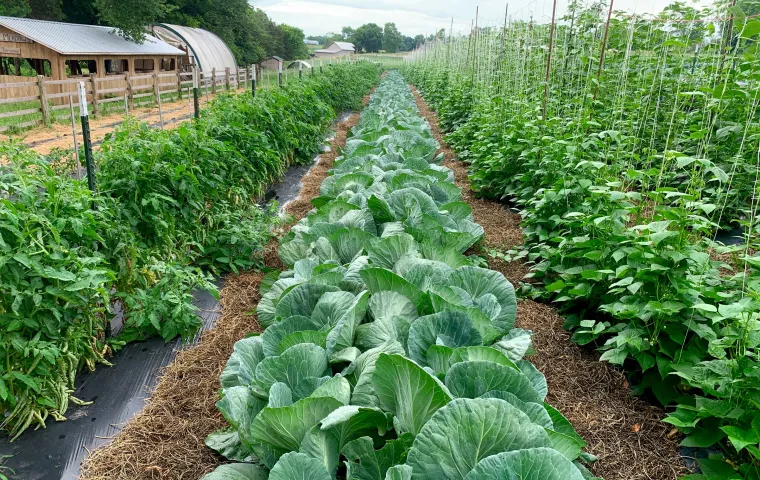 Open-field production
Coordinate fields, crop plans, weather-sensitive work, crop protection records, harvest waves, and field results.
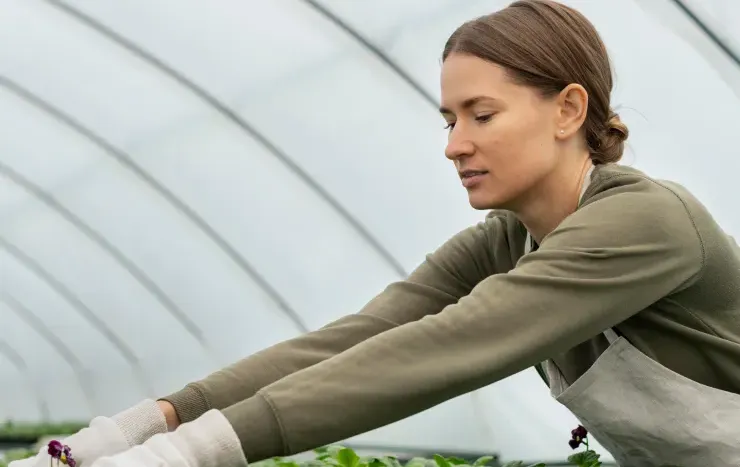
 Propagation and planting material
Track plant lots, provenance, locations, transplants, recurring care, grading, losses, and readiness for sale or transfer.
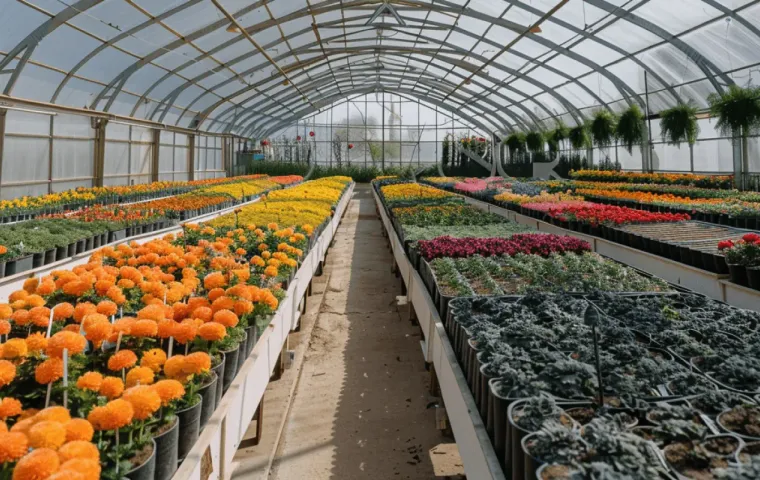
 Protected cultivation
Connect crop stages, climate targets, irrigation, crop work, observations, and harvest results by greenhouse block.
Questions before setup
Yes. The physical block and planting attributes can remain stable while each active growing cycle carries its own stages, tasks, observations, and results.
Yes. The monitoring workflow can be configured around the stage and parameters the farm actually records, including key dates, photos, and comments.
No. It organizes observations, history, assignments, and supporting data. Diagnosis and agronomic decisions remain with qualified specialists.
Yes. Starting with one active production contour is the recommended way to validate the structure and daily workflow before scaling.
Perennial crops
Keep blocks, rows, varieties, phenology, scouting, crop protection, irrigation work, yield, and quality in one perennial history.