
Location and batch
Room, line, rack, tier, tray, crop, variety, and seeding date.
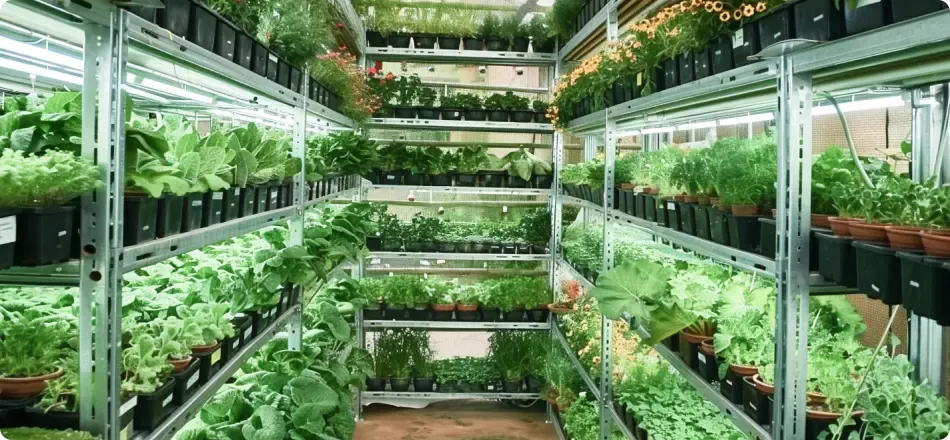
Vertical farm software
Connect racks and tiers, batches, crop protocols and recipes, lighting, microclimate, irrigation, shift work, and each cycle’s result.
One production context
Every tier has its own microclimate
Airflow, light, humidity, and solution delivery vary by zone and height. Link data to rack, tier, tray, batch, and stage.
Room, line, rack, tier, tray, crop, variety, and seeding date.
Photoperiod, climate ranges, nutrition, irrigation, and recurring work.
Environmental readings, observations, photos, and completed shift tasks.
Harvest date, actual output, and lessons for the next batch.
Vertical farm registry
Recreate the hierarchy from site and room to rack, tier, and tray. Store crop, variety, seeding, density, planned output, stage, and owner for each batch.
Setpoints and tasks change with the stage
Crop protocol and growing recipes
The protocol runs from germination to harvest. Each stage combines photoperiod, climate, pH and EC, irrigation, and shift work. Adapt it to the variety, equipment, and batch target.
How crop protocols workLighting is part of the protocol and cost
Connect photoperiod and target and actual light to the batch and recipe. Gros.farm preserves modes, compares tiers, and can send supported setpoints locally.
Move the day to favorable tariff hours only when the crop protocol allows it.
Hydroponics and irrigation
Set target pH and EC, solution temperature, duration, and irrigation frequency. Enter actuals manually or through an available integration.
Climate and local automation
Gros.farm links readings to zones and batches, compares them with the recipe, and can send setpoints. Controllers and safety logic remain autonomous.
Shift work and production result
Tasks connect to location, batch, worker, and deadline. After harvest, compare output with the recipe, actual conditions, and completed work.
Check uniformity on upper tiersLine B · by 10:30
Check pH and EC after adjustmentSolution unit 2 · grower
Transplant batch LET-184Rack 12 · 14 trays
ProtocolConditionsWorkResult

Gros.farm AI platform
Tiers, batches, recipes, actual modes, tasks, and output form one context. AI compares cycles and finds exceptions and gaps; specialists decide changes.
Explore AI capabilitiesQuestions for vertical farm data
Not one template for every crop
Crops differ in cycle length, density, light, nutrition, and work. Keep a separate protocol and proven recipe for each crop and variety.
Leafy greens
Herbs
Short cycle
Plant material
First working loop
Add one rack, the current batch and recipe, and upcoming work. Scale the loop after the first cycle.
Add one line, racks, tiers, and current batches.
Set stages, targets, photoperiod, nutrition, and upcoming work.
Record actuals and compare the first cycle with plan.
Import the structure and use the current recipe as the first cycle’s base. Import is free.
Questions and answers
A vertical farm usually uses multi-tier crops. Indoor farming is broader, while urban farm can include greenhouses or local production. Gros.farm follows the real structure: zones, lines, racks, tiers, and batches.
Managed cycles for leafy greens, herbs, microgreens, seedlings, and other indoor crops. Protocols, metrics, and work adapt to the farm.
A repeatable set of stage parameters and work: photoperiod, climate ranges, target pH and EC, irrigation, and shift tasks. Compare it with actual conditions and output.
Yes. Start with the registry, protocol, batches, shift tasks, and manual observations. Add sensors when their practical value and engineering design are clear.
It depends on equipment and available integration. Gros.farm connects to a local control node while local controllers remain autonomous. Contact us to review the design.
Targets and irrigation modes live in the protocol, while actual pH, EC, and events link to the batch. Direct control depends on verified equipment integration.
Gros.farm does not promise a fixed saving. It links photoperiod, modes, actuals, and batch results so the team can test changes on its own equipment.
No. GFAi compares cycles, finds exceptions, and frames testable hypotheses. Specialists decide changes to light, nutrition, climate, or protocol.
Next step
We will show how to connect farm structure, growing recipe, actual data, and batch result.